

AI-Driven Energy Wheeling: Navigating SA's 2026 Power Market
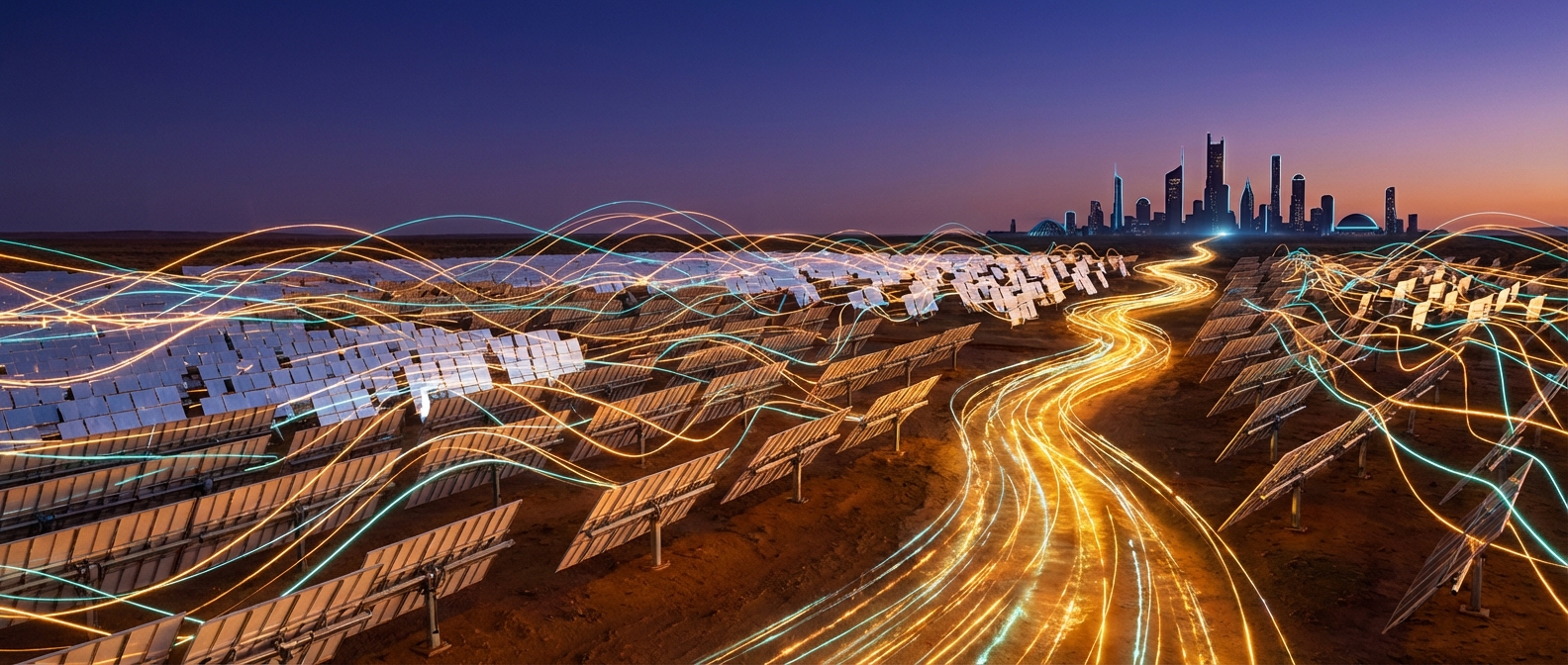
Discover how AI-driven settlement engines are revolutionizing South Africa’s energy sector by automating real-time wheeling and power trading on the new open-access grid.
The landscape of South African energy has undergone a seismic shift. Following the signing of the Electricity Regulation Amendment (ERA) Act in 2024 and the full operationalization of the National Transmission Company of South Africa (NTCSA) in early 2025, the country has moved decisively toward a competitive, open-access electricity market. By 2026, the traditional model of a single-buyer monopoly has been replaced by a multi-market structure where private producers, traders, and consumers can trade power across the national grid. However, this liberation of the energy market brings a significant technical challenge: the complexity of real-time settlement and energy wheeling. For South African business owners, understanding the role of AI-driven settlement engines is no longer optional—it is a prerequisite for navigating the new energy economy.
Energy wheeling is the process of transporting electricity from a private generator, such as a solar farm in the Northern Cape, across the national grid to a consumer in an urban center like Johannesburg or Cape Town. While the concept is straightforward, the execution is mathematically intense. In a 2026 context, the grid is no longer a static pipe but a dynamic marketplace. Thousands of Independent Power Producers (IPPs) are now feeding intermittent renewable energy into the system. Because solar and wind generation fluctuate based on weather conditions, and business demand shifts by the hour, reconciling who produced what and who consumed what requires millisecond precision. This is where manual billing systems fail and where AI-driven settlement engines become the backbone of the industry.
Traditional wheeling often relied on monthly billing cycles, which created significant cash flow delays and reconciliation errors. In the current open-access grid, the NTCSA’s Market Operator requires more granular data. Companies like EnPower Trading and Etana Energy have pioneered the use of sophisticated software to manage these transactions. An AI-driven settlement engine functions as a high-frequency clearinghouse. It integrates directly with smart meters installed at both the generation site and the consumption point. By utilizing Machine Learning algorithms, these engines can predict generation patterns and consumption spikes, allowing businesses to optimize their Power Purchase Agreements (PPAs) in real-time. This automation ensures that the credit for energy produced is accurately applied to the consumer's bill, accounting for line losses and time-of-use tariffs set by NERSA.
One of the most significant developments leading into 2026 has been the evolution of Virtual Wheeling. Initially piloted by Vodacom in partnership with Eskom, Virtual Wheeling allows companies with multiple small sites—such as retail chains or telecommunications towers—to aggregate their energy consumption into a single bill. This removes the need for complex individual municipal negotiations. AI plays a critical role here by performing 'multi-party settlement.' The engine must ingest data from various municipal billing systems, which often operate on different legacy platforms, and consolidate them into a transparent digital ledger. For a business owner, this means the ability to achieve 100% renewable energy coverage even if their individual storefronts cannot host solar panels.
Beyond simple accounting, AI-driven engines are now being used for 'Curtailment Management' and 'Demand Side Response.' In the 2026 grid, when there is an oversupply of renewable energy, prices may drop, or the grid may become congested. AI systems can automatically signal industrial equipment to increase production during these periods or charge on-site battery storage systems to take advantage of lower rates. Conversely, during periods of low generation, the engine can trigger load-shedding protocols at a facility level to avoid high-cost peak tariffs. This level of automation turns energy from a fixed overhead cost into a strategic, tradable asset. Statistics from recent market reports suggest that businesses using automated settlement engines have reduced their energy procurement costs by up to 18% compared to those on standard municipal tariffs.
Technologically, these settlement engines are built on robust API architectures and often utilize private blockchain or distributed ledger technology (DLT) to ensure that records are immutable and auditable. This is crucial for ESG (Environmental, Social, and Governance) reporting. When a South African company claims to be powered by green energy, the AI engine provides the 'proof of origin' by matching the timestamp of renewable generation with the timestamp of consumption. This level of transparency is essential for businesses looking to maintain international competitiveness and satisfy the requirements of the Carbon Border Adjustment Mechanism (CBAM) when exporting to markets like the European Union.
As the NTCSA continues to refine the day-ahead and intraday markets, the speed of trading will only increase. We are moving toward a future where energy is traded much like stocks on the JSE. For entrepreneurs, the barrier to entry is no longer the availability of power, but the software capability to manage it. Implementing these systems requires a deep understanding of both energy regulations and custom software architecture. While the transition may seem daunting, the long-term benefits of energy independence and price stability are undeniable. At WriteNow Agency, we specialize in building the custom business automation tools and AI solutions that allow South African enterprises to integrate with modern infrastructures like the open-access grid, ensuring they remain at the forefront of technological adoption. The era of the passive energy consumer is over; the era of the active, AI-empowered energy trader has begun.
Energy wheeling is the process of transporting electricity from a private generator, such as a solar farm in the Northern Cape, across the national grid to a consumer in an urban center like Johannesburg or Cape Town. While the concept is straightforward, the execution is mathematically intense. In a 2026 context, the grid is no longer a static pipe but a dynamic marketplace. Thousands of Independent Power Producers (IPPs) are now feeding intermittent renewable energy into the system. Because solar and wind generation fluctuate based on weather conditions, and business demand shifts by the hour, reconciling who produced what and who consumed what requires millisecond precision. This is where manual billing systems fail and where AI-driven settlement engines become the backbone of the industry.
Traditional wheeling often relied on monthly billing cycles, which created significant cash flow delays and reconciliation errors. In the current open-access grid, the NTCSA’s Market Operator requires more granular data. Companies like EnPower Trading and Etana Energy have pioneered the use of sophisticated software to manage these transactions. An AI-driven settlement engine functions as a high-frequency clearinghouse. It integrates directly with smart meters installed at both the generation site and the consumption point. By utilizing Machine Learning algorithms, these engines can predict generation patterns and consumption spikes, allowing businesses to optimize their Power Purchase Agreements (PPAs) in real-time. This automation ensures that the credit for energy produced is accurately applied to the consumer's bill, accounting for line losses and time-of-use tariffs set by NERSA.
One of the most significant developments leading into 2026 has been the evolution of Virtual Wheeling. Initially piloted by Vodacom in partnership with Eskom, Virtual Wheeling allows companies with multiple small sites—such as retail chains or telecommunications towers—to aggregate their energy consumption into a single bill. This removes the need for complex individual municipal negotiations. AI plays a critical role here by performing 'multi-party settlement.' The engine must ingest data from various municipal billing systems, which often operate on different legacy platforms, and consolidate them into a transparent digital ledger. For a business owner, this means the ability to achieve 100% renewable energy coverage even if their individual storefronts cannot host solar panels.
Beyond simple accounting, AI-driven engines are now being used for 'Curtailment Management' and 'Demand Side Response.' In the 2026 grid, when there is an oversupply of renewable energy, prices may drop, or the grid may become congested. AI systems can automatically signal industrial equipment to increase production during these periods or charge on-site battery storage systems to take advantage of lower rates. Conversely, during periods of low generation, the engine can trigger load-shedding protocols at a facility level to avoid high-cost peak tariffs. This level of automation turns energy from a fixed overhead cost into a strategic, tradable asset. Statistics from recent market reports suggest that businesses using automated settlement engines have reduced their energy procurement costs by up to 18% compared to those on standard municipal tariffs.
Technologically, these settlement engines are built on robust API architectures and often utilize private blockchain or distributed ledger technology (DLT) to ensure that records are immutable and auditable. This is crucial for ESG (Environmental, Social, and Governance) reporting. When a South African company claims to be powered by green energy, the AI engine provides the 'proof of origin' by matching the timestamp of renewable generation with the timestamp of consumption. This level of transparency is essential for businesses looking to maintain international competitiveness and satisfy the requirements of the Carbon Border Adjustment Mechanism (CBAM) when exporting to markets like the European Union.
As the NTCSA continues to refine the day-ahead and intraday markets, the speed of trading will only increase. We are moving toward a future where energy is traded much like stocks on the JSE. For entrepreneurs, the barrier to entry is no longer the availability of power, but the software capability to manage it. Implementing these systems requires a deep understanding of both energy regulations and custom software architecture. While the transition may seem daunting, the long-term benefits of energy independence and price stability are undeniable. At WriteNow Agency, we specialize in building the custom business automation tools and AI solutions that allow South African enterprises to integrate with modern infrastructures like the open-access grid, ensuring they remain at the forefront of technological adoption. The era of the passive energy consumer is over; the era of the active, AI-empowered energy trader has begun.



Comments (0)
Leave a Comment