

Visualizing Industrial Efficiency with WebGPU Digital Twins in SA
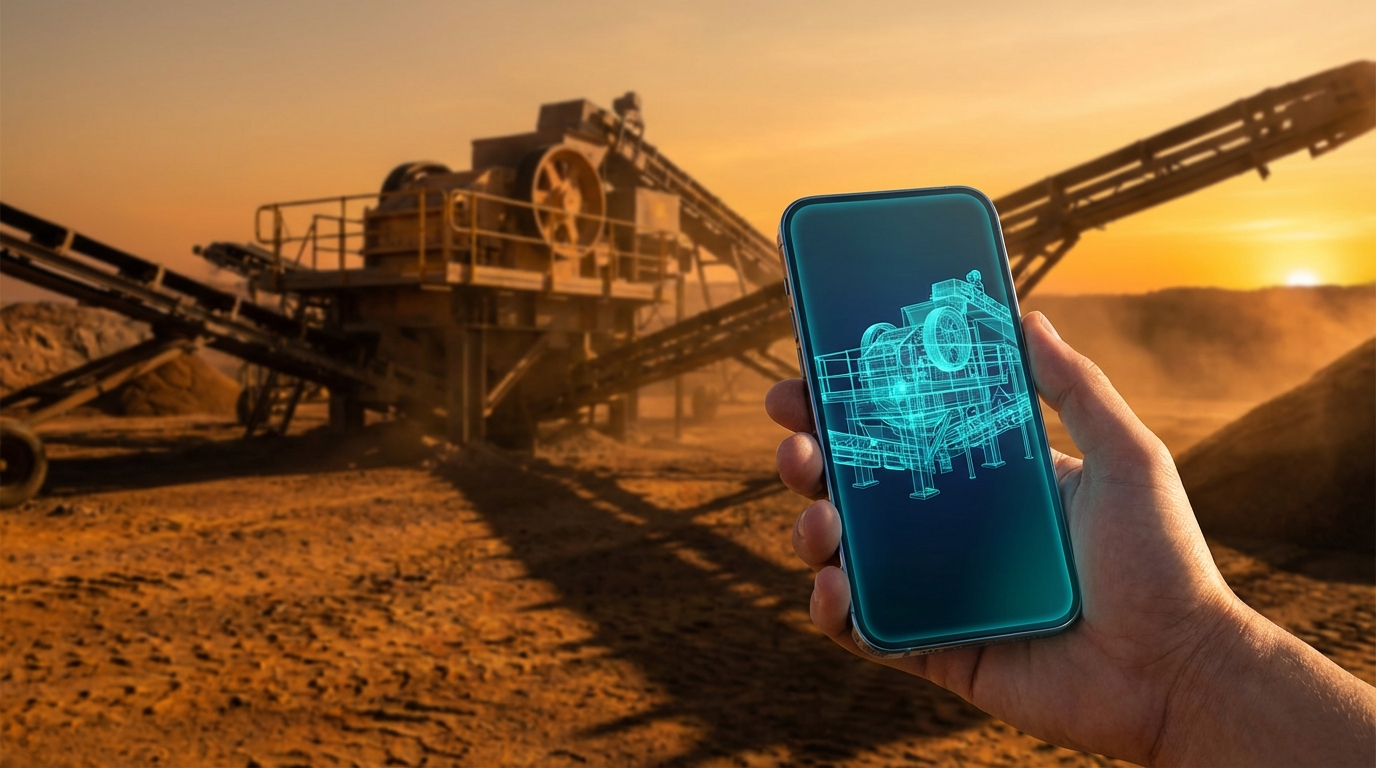
Discover how the WebGPU standard enables high-performance 3D Digital Twins for South African mining and manufacturing, accessible from any device without specialized hardware.
The landscape of South African industry is undergoing a silent but profound transformation. As the nation grapples with the dual pressures of global competition and local infrastructure challenges, mining and manufacturing leaders are increasingly turning to Digital Twins to optimize operations. Traditionally, a Digital Twin—a virtual, real-time representation of a physical asset—required high-end workstations and specialized software installations to render complex 3D environments. However, the emergence of the WebGPU standard is fundamentally changing this dynamic, offering a hardware-agnostic approach that brings enterprise-grade 3D visualization directly into the web browser. For South African business owners, this represents a significant leap forward in accessibility and operational oversight.
To understand the impact of WebGPU, one must first look at the limitations of its predecessor, WebGL. While WebGL allowed for basic 3D graphics in browsers, it was designed nearly a decade ago and struggled with the massive datasets generated by modern industrial sensors. In contrast, WebGPU, which reached a stable release in Google Chrome 113 and is now being integrated into Safari and Firefox, provides a lower-level interface to the graphics processing unit. This allows developers to tap into the raw power of modern GPUs, including advanced features like compute shaders. For a mining operation in the Northern Cape or a manufacturing plant in KwaZulu-Natal, this means that a standard office laptop or even a high-end tablet can now render a high-fidelity, real-time 3D model of a crushing circuit or an assembly line that previously required a dedicated gaming-grade computer.
The hardware-agnostic nature of WebGPU is particularly relevant in the South African context. Many local industrial sites operate with a diverse fleet of hardware, ranging from legacy desktop systems to modern mobile devices used by field technicians. WebGPU abstracts the underlying graphics API—whether it is Vulkan on Linux and Android, Metal on macOS and iOS, or Direct3D 12 on Windows—allowing a single web-based application to run with native performance across all platforms. This reduces the total cost of ownership for digital transformation projects, as companies no longer need to invest in expensive hardware upgrades for every user who needs access to the Digital Twin. This democratization of data ensures that decision-makers from the boardroom to the factory floor are looking at the same real-time information.
In the mining sector, companies like Anglo American and Exxaro have already begun exploring advanced visualization through initiatives like 'FutureSmart Mining.' By leveraging WebGPU-powered Digital Twins, these organizations can visualize subterranean geological data and machinery performance in three dimensions without the lag associated with older web technologies. For instance, a Digital Twin can integrate live data from IoT sensors monitoring a ventilation system deep underground. Using the compute power of WebGPU, the system can simulate airflow patterns in real-time, allowing engineers to identify potential hazards before they manifest. This level of predictive maintenance and safety monitoring is critical in South Africa’s deep-level mining environments, where operational efficiency is directly tied to worker safety and energy consumption.
Manufacturing operations benefit equally from this technology. Consider a large-scale automotive assembly plant in the Eastern Cape. By implementing a WebGPU-based Digital Twin, plant managers can monitor the efficiency of robotic arms and conveyor systems through a browser-based dashboard. Tools like Babylon.js and Three.js have already introduced WebGPU support, enabling developers to create photorealistic textures and complex lighting models that make the digital representation indistinguishable from the physical asset. When integrated with an ERP system, the Digital Twin can highlight bottlenecks in the production line using heat maps rendered directly on the 3D model. This immediate visual feedback allows for rapid troubleshooting and process optimization, which is essential for maintaining a competitive edge in the global manufacturing market.
Furthermore, the integration of WebGPU with Artificial Intelligence (AI) and machine learning models opens new frontiers for industrial automation. Because WebGPU allows for general-purpose GPU computing, complex AI inference tasks can be performed locally within the browser. This means a Digital Twin could not only visualize current operations but also run 'what-if' simulations locally to predict the impact of a machine failure or a change in production speed. For South African entrepreneurs looking to scale their operations, this capability provides a powerful tool for risk assessment and strategic planning. The ability to run these simulations in a browser environment simplifies the deployment process, as updates to the Digital Twin can be pushed instantly to all users without requiring manual software updates on individual machines.
As the Council for Scientific and Industrial Research (CSIR) continues to advocate for the adoption of Fourth Industrial Revolution (4IR) technologies in South Africa, the role of open standards like WebGPU cannot be overstated. By moving away from proprietary, closed-loop visualization software, South African industries can build more resilient and flexible digital ecosystems. This shift supports the broader goals of the Minerals Council South Africa to modernize the industry and improve the global standing of local manufacturing. The data-rich environments created by WebGPU Digital Twins provide a foundation for better ESG (Environmental, Social, and Governance) reporting, as companies can precisely track resource usage and emissions in a transparent, visual format.
At WriteNow Agency, we recognize the transformative potential of these technologies for the local market. Building a robust Digital Twin requires a deep understanding of both high-performance web development and the specific operational challenges faced by South African businesses. By leveraging the WebGPU standard, it is now possible to create bespoke solutions that are both powerful and accessible, ensuring that the benefits of 3D visualization are not limited to those with the most expensive hardware. As we look toward a more digitized future, the ability to visualize industrial efficiency in real-time will be a defining characteristic of successful mining and manufacturing enterprises.
In conclusion, the transition to WebGPU-powered Digital Twins represents a strategic opportunity for South African industry. By breaking down the barriers to high-performance visualization, this technology enables more informed decision-making, enhances safety, and drives operational excellence. For business owners and entrepreneurs, the message is clear: the future of industrial monitoring is web-based, hardware-agnostic, and incredibly powerful. Embracing these tools today will provide the agility needed to thrive in an increasingly complex and data-driven global economy.
To understand the impact of WebGPU, one must first look at the limitations of its predecessor, WebGL. While WebGL allowed for basic 3D graphics in browsers, it was designed nearly a decade ago and struggled with the massive datasets generated by modern industrial sensors. In contrast, WebGPU, which reached a stable release in Google Chrome 113 and is now being integrated into Safari and Firefox, provides a lower-level interface to the graphics processing unit. This allows developers to tap into the raw power of modern GPUs, including advanced features like compute shaders. For a mining operation in the Northern Cape or a manufacturing plant in KwaZulu-Natal, this means that a standard office laptop or even a high-end tablet can now render a high-fidelity, real-time 3D model of a crushing circuit or an assembly line that previously required a dedicated gaming-grade computer.
The hardware-agnostic nature of WebGPU is particularly relevant in the South African context. Many local industrial sites operate with a diverse fleet of hardware, ranging from legacy desktop systems to modern mobile devices used by field technicians. WebGPU abstracts the underlying graphics API—whether it is Vulkan on Linux and Android, Metal on macOS and iOS, or Direct3D 12 on Windows—allowing a single web-based application to run with native performance across all platforms. This reduces the total cost of ownership for digital transformation projects, as companies no longer need to invest in expensive hardware upgrades for every user who needs access to the Digital Twin. This democratization of data ensures that decision-makers from the boardroom to the factory floor are looking at the same real-time information.
In the mining sector, companies like Anglo American and Exxaro have already begun exploring advanced visualization through initiatives like 'FutureSmart Mining.' By leveraging WebGPU-powered Digital Twins, these organizations can visualize subterranean geological data and machinery performance in three dimensions without the lag associated with older web technologies. For instance, a Digital Twin can integrate live data from IoT sensors monitoring a ventilation system deep underground. Using the compute power of WebGPU, the system can simulate airflow patterns in real-time, allowing engineers to identify potential hazards before they manifest. This level of predictive maintenance and safety monitoring is critical in South Africa’s deep-level mining environments, where operational efficiency is directly tied to worker safety and energy consumption.
Manufacturing operations benefit equally from this technology. Consider a large-scale automotive assembly plant in the Eastern Cape. By implementing a WebGPU-based Digital Twin, plant managers can monitor the efficiency of robotic arms and conveyor systems through a browser-based dashboard. Tools like Babylon.js and Three.js have already introduced WebGPU support, enabling developers to create photorealistic textures and complex lighting models that make the digital representation indistinguishable from the physical asset. When integrated with an ERP system, the Digital Twin can highlight bottlenecks in the production line using heat maps rendered directly on the 3D model. This immediate visual feedback allows for rapid troubleshooting and process optimization, which is essential for maintaining a competitive edge in the global manufacturing market.
Furthermore, the integration of WebGPU with Artificial Intelligence (AI) and machine learning models opens new frontiers for industrial automation. Because WebGPU allows for general-purpose GPU computing, complex AI inference tasks can be performed locally within the browser. This means a Digital Twin could not only visualize current operations but also run 'what-if' simulations locally to predict the impact of a machine failure or a change in production speed. For South African entrepreneurs looking to scale their operations, this capability provides a powerful tool for risk assessment and strategic planning. The ability to run these simulations in a browser environment simplifies the deployment process, as updates to the Digital Twin can be pushed instantly to all users without requiring manual software updates on individual machines.
As the Council for Scientific and Industrial Research (CSIR) continues to advocate for the adoption of Fourth Industrial Revolution (4IR) technologies in South Africa, the role of open standards like WebGPU cannot be overstated. By moving away from proprietary, closed-loop visualization software, South African industries can build more resilient and flexible digital ecosystems. This shift supports the broader goals of the Minerals Council South Africa to modernize the industry and improve the global standing of local manufacturing. The data-rich environments created by WebGPU Digital Twins provide a foundation for better ESG (Environmental, Social, and Governance) reporting, as companies can precisely track resource usage and emissions in a transparent, visual format.
At WriteNow Agency, we recognize the transformative potential of these technologies for the local market. Building a robust Digital Twin requires a deep understanding of both high-performance web development and the specific operational challenges faced by South African businesses. By leveraging the WebGPU standard, it is now possible to create bespoke solutions that are both powerful and accessible, ensuring that the benefits of 3D visualization are not limited to those with the most expensive hardware. As we look toward a more digitized future, the ability to visualize industrial efficiency in real-time will be a defining characteristic of successful mining and manufacturing enterprises.
In conclusion, the transition to WebGPU-powered Digital Twins represents a strategic opportunity for South African industry. By breaking down the barriers to high-performance visualization, this technology enables more informed decision-making, enhances safety, and drives operational excellence. For business owners and entrepreneurs, the message is clear: the future of industrial monitoring is web-based, hardware-agnostic, and incredibly powerful. Embracing these tools today will provide the agility needed to thrive in an increasingly complex and data-driven global economy.

Comments (0)
Leave a Comment