

Combating Shadow AI: Custom Interfaces for POPIA Compliance in 2026
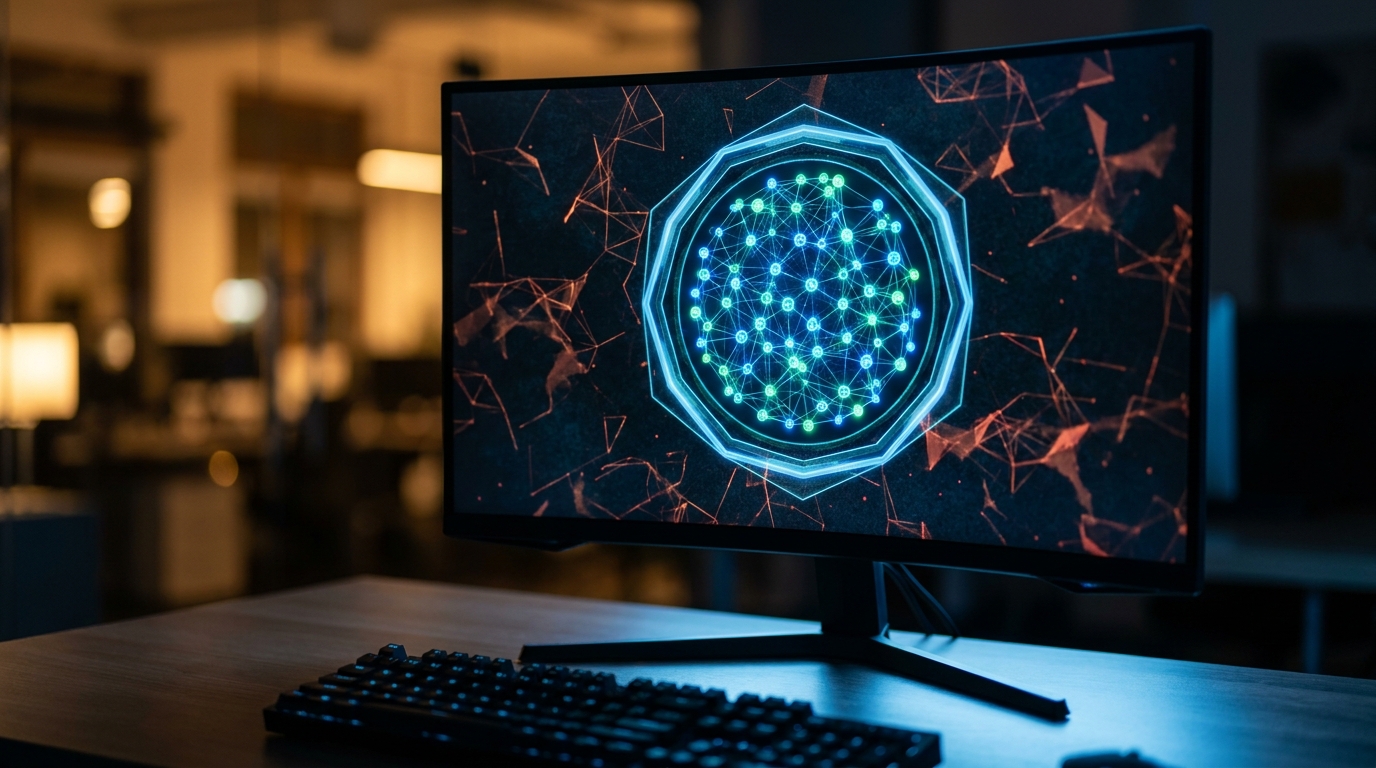
With Shadow AI causing a spike in POPIA data breaches across South Africa in 2026, businesses must adopt custom, ring-fenced AI solutions. Discover how to secure enterprise data, maintain compliance, and safely empower your workforce.
The year 2026 has brought unprecedented technological momentum to the South African business landscape. From Johannesburg's financial district to Cape Town's tech hubs, artificial intelligence is no longer a futuristic concept but a daily operational necessity. However, while executives strategize over enterprise-wide digital transformation, a silent and highly pervasive threat has infiltrated the workplace: Shadow AI. This phenomenon occurs when employees, driven by the pressure to be more productive, bypass official IT protocols and use unvetted, public artificial intelligence tools to complete their daily tasks. While their intentions are generally good, the consequences for data security and regulatory compliance are severe.
Shadow AI is the modern, more dangerous evolution of shadow IT. When a marketing manager pastes a client list into a free, public generative AI model to segment an email campaign, or when a developer feeds proprietary source code into a public chatbot to debug an error, they are effectively leaking sensitive company data. According to recent Microsoft WorkLab research, a staggering 75 percent of employees use artificial intelligence tools not officially sanctioned by their IT or security teams. Furthermore, 52 percent of workers admit they would not disclose their use of these tools to management. This means that self-reported AI policies and outright bans are functionally unenforceable. Employees will find a way to use the tools that make their jobs easier, leaving business owners completely blind to where their data is going.
The financial and operational impact of these invisible data flows is already materializing. IBM's recent Cost of a Data Breach Report revealed that one in five organizations has suffered a security breach directly related to Shadow AI, with these incidents compromising personally identifiable information at alarming rates. South Africa is not immune to this trend. In fact, the South African Information Regulator recently noted that almost 2,000 data breaches were reported in the country since April 2025, representing a massive 40 percent increase from the previous year. High-profile incidents, such as the April 2026 data breach notification from Standard Bank to its business clients, underscore the escalating cybersecurity challenges facing local enterprises. As AI adoption accelerates, the attack surface expands exponentially, particularly through peripheral blindspots and unsanctioned employee applications.
For South African businesses, the unchecked use of public AI models represents a ticking compliance timebomb under the Protection of Personal Information Act, commonly known as POPIA. The moment an employee inputs a customer's personal information into a public AI interface, that data is transferred outside of the organization's secure environment. In many cases, it is ingested by the AI provider to train future models, meaning the data can never be truly retrieved or deleted. This is a direct violation of POPIA's stringent requirements regarding data processing, consent, and cross-border data transfers. The regulatory environment has also become increasingly punitive. Following the recent POPIA amendments, the Information Regulator has adopted a highly assertive enforcement strategy, issuing formal compliance notices and administrative fines that can reach millions of Rands. Furthermore, the Companies and Intellectual Property Commission now publicly flags companies that fail to meet basic compliance requirements. The reputational damage of such public flagging, combined with the financial devastation of a data breach, can cripple a growing enterprise.
Faced with these risks, many South African business owners instinctively try to block access to popular AI websites on their corporate networks. However, in an era of remote work, personal devices, and cellular data, blocking URLs is a futile exercise. Employees who have experienced the massive productivity gains of generative AI will simply use their personal smartphones or home networks to bypass corporate firewalls. Attempting to suppress AI adoption not only stifles innovation and puts the company at a competitive disadvantage, but it also drives the behavior further underground, exacerbating the Shadow AI threat. The only sustainable way to protect sensitive data while harnessing the power of artificial intelligence is to provide employees with a superior, secure alternative.
The definitive solution for South African enterprises in 2026 is the development of custom, ring-fenced AI interfaces. Instead of relying on public, consumer-grade tools, businesses must deploy private AI environments built specifically for their organizational needs. A ring-fenced AI interface utilizes enterprise-grade application programming interfaces, or APIs, provided by leading AI developers, but with strict, legally binding data processing agreements. Under these enterprise agreements, the AI providers are contractually prohibited from using the company's inputs or outputs to train their public models. The data remains completely encrypted in transit and at rest, ensuring a zero-data-retention policy on the provider's end.
Building a custom AI interface allows businesses to integrate the technology directly into their existing secure ecosystems. Through seamless integration with corporate single sign-on systems, IT departments regain total visibility and control over who is using the AI and for what purposes. Role-based access controls can be implemented, ensuring that an HR employee can use the AI to draft job descriptions without having access to the financial forecasting models used by the CFO. Furthermore, custom interfaces can be securely connected to internal company databases using techniques like Retrieval-Augmented Generation. This allows the AI to provide highly accurate, context-aware answers based strictly on the company's proprietary data, without ever exposing that data to the public internet.
Beyond the critical necessity of POPIA compliance and data security, custom AI solutions offer immense operational advantages. When an AI interface is tailored to a specific business process, it becomes significantly more powerful than a generic public chatbot. Workflows can be automated, from customer service triage to complex data analysis, driving unprecedented efficiency. South African companies that invest in these private AI architectures are finding that their average cost of a data breach is actually declining, as AI-enabled cyber defense tools help security teams identify and contain threats faster. By establishing a secure, governed AI environment, businesses empower their workforce to innovate fearlessly, knowing that the guardrails are securely in place.
Transitioning from a chaotic Shadow AI environment to a streamlined, secure enterprise AI architecture requires specialized expertise. It demands a deep understanding of both cutting-edge artificial intelligence models and the specific regulatory landscape of South Africa. This is where partnering with a specialized software development agency becomes invaluable. WriteNow Agency, a premier South African software development firm based in Sandton specializing in Custom Software, Web Development, Business Automation, and AI Solutions, is perfectly positioned to guide businesses through this critical transition. By designing and deploying bespoke, ring-fenced AI interfaces, WriteNow Agency helps local enterprises unlock the full potential of artificial intelligence while ensuring ironclad POPIA compliance and protecting their most valuable data assets.
As we navigate the complexities of 2026, the question is no longer whether your employees are using artificial intelligence, but rather how they are using it. Ignoring the Shadow AI threat is a gamble that South African businesses simply cannot afford to take, given the aggressive regulatory stance of the Information Regulator and the escalating sophistication of cyber threats. By proactively building custom, ring-fenced AI interfaces, organizations can transform a massive security liability into their greatest competitive advantage. It is time to bring AI out of the shadows, secure your corporate data, and build a resilient, future-proof business for the digital age.
Shadow AI is the modern, more dangerous evolution of shadow IT. When a marketing manager pastes a client list into a free, public generative AI model to segment an email campaign, or when a developer feeds proprietary source code into a public chatbot to debug an error, they are effectively leaking sensitive company data. According to recent Microsoft WorkLab research, a staggering 75 percent of employees use artificial intelligence tools not officially sanctioned by their IT or security teams. Furthermore, 52 percent of workers admit they would not disclose their use of these tools to management. This means that self-reported AI policies and outright bans are functionally unenforceable. Employees will find a way to use the tools that make their jobs easier, leaving business owners completely blind to where their data is going.
The financial and operational impact of these invisible data flows is already materializing. IBM's recent Cost of a Data Breach Report revealed that one in five organizations has suffered a security breach directly related to Shadow AI, with these incidents compromising personally identifiable information at alarming rates. South Africa is not immune to this trend. In fact, the South African Information Regulator recently noted that almost 2,000 data breaches were reported in the country since April 2025, representing a massive 40 percent increase from the previous year. High-profile incidents, such as the April 2026 data breach notification from Standard Bank to its business clients, underscore the escalating cybersecurity challenges facing local enterprises. As AI adoption accelerates, the attack surface expands exponentially, particularly through peripheral blindspots and unsanctioned employee applications.
For South African businesses, the unchecked use of public AI models represents a ticking compliance timebomb under the Protection of Personal Information Act, commonly known as POPIA. The moment an employee inputs a customer's personal information into a public AI interface, that data is transferred outside of the organization's secure environment. In many cases, it is ingested by the AI provider to train future models, meaning the data can never be truly retrieved or deleted. This is a direct violation of POPIA's stringent requirements regarding data processing, consent, and cross-border data transfers. The regulatory environment has also become increasingly punitive. Following the recent POPIA amendments, the Information Regulator has adopted a highly assertive enforcement strategy, issuing formal compliance notices and administrative fines that can reach millions of Rands. Furthermore, the Companies and Intellectual Property Commission now publicly flags companies that fail to meet basic compliance requirements. The reputational damage of such public flagging, combined with the financial devastation of a data breach, can cripple a growing enterprise.
Faced with these risks, many South African business owners instinctively try to block access to popular AI websites on their corporate networks. However, in an era of remote work, personal devices, and cellular data, blocking URLs is a futile exercise. Employees who have experienced the massive productivity gains of generative AI will simply use their personal smartphones or home networks to bypass corporate firewalls. Attempting to suppress AI adoption not only stifles innovation and puts the company at a competitive disadvantage, but it also drives the behavior further underground, exacerbating the Shadow AI threat. The only sustainable way to protect sensitive data while harnessing the power of artificial intelligence is to provide employees with a superior, secure alternative.
The definitive solution for South African enterprises in 2026 is the development of custom, ring-fenced AI interfaces. Instead of relying on public, consumer-grade tools, businesses must deploy private AI environments built specifically for their organizational needs. A ring-fenced AI interface utilizes enterprise-grade application programming interfaces, or APIs, provided by leading AI developers, but with strict, legally binding data processing agreements. Under these enterprise agreements, the AI providers are contractually prohibited from using the company's inputs or outputs to train their public models. The data remains completely encrypted in transit and at rest, ensuring a zero-data-retention policy on the provider's end.
Building a custom AI interface allows businesses to integrate the technology directly into their existing secure ecosystems. Through seamless integration with corporate single sign-on systems, IT departments regain total visibility and control over who is using the AI and for what purposes. Role-based access controls can be implemented, ensuring that an HR employee can use the AI to draft job descriptions without having access to the financial forecasting models used by the CFO. Furthermore, custom interfaces can be securely connected to internal company databases using techniques like Retrieval-Augmented Generation. This allows the AI to provide highly accurate, context-aware answers based strictly on the company's proprietary data, without ever exposing that data to the public internet.
Beyond the critical necessity of POPIA compliance and data security, custom AI solutions offer immense operational advantages. When an AI interface is tailored to a specific business process, it becomes significantly more powerful than a generic public chatbot. Workflows can be automated, from customer service triage to complex data analysis, driving unprecedented efficiency. South African companies that invest in these private AI architectures are finding that their average cost of a data breach is actually declining, as AI-enabled cyber defense tools help security teams identify and contain threats faster. By establishing a secure, governed AI environment, businesses empower their workforce to innovate fearlessly, knowing that the guardrails are securely in place.
Transitioning from a chaotic Shadow AI environment to a streamlined, secure enterprise AI architecture requires specialized expertise. It demands a deep understanding of both cutting-edge artificial intelligence models and the specific regulatory landscape of South Africa. This is where partnering with a specialized software development agency becomes invaluable. WriteNow Agency, a premier South African software development firm based in Sandton specializing in Custom Software, Web Development, Business Automation, and AI Solutions, is perfectly positioned to guide businesses through this critical transition. By designing and deploying bespoke, ring-fenced AI interfaces, WriteNow Agency helps local enterprises unlock the full potential of artificial intelligence while ensuring ironclad POPIA compliance and protecting their most valuable data assets.
As we navigate the complexities of 2026, the question is no longer whether your employees are using artificial intelligence, but rather how they are using it. Ignoring the Shadow AI threat is a gamble that South African businesses simply cannot afford to take, given the aggressive regulatory stance of the Information Regulator and the escalating sophistication of cyber threats. By proactively building custom, ring-fenced AI interfaces, organizations can transform a massive security liability into their greatest competitive advantage. It is time to bring AI out of the shadows, secure your corporate data, and build a resilient, future-proof business for the digital age.

Comments (0)
Leave a Comment