

SIM-Swap Fraud: Why SA Enterprises Must Adopt Passkeys in 2026
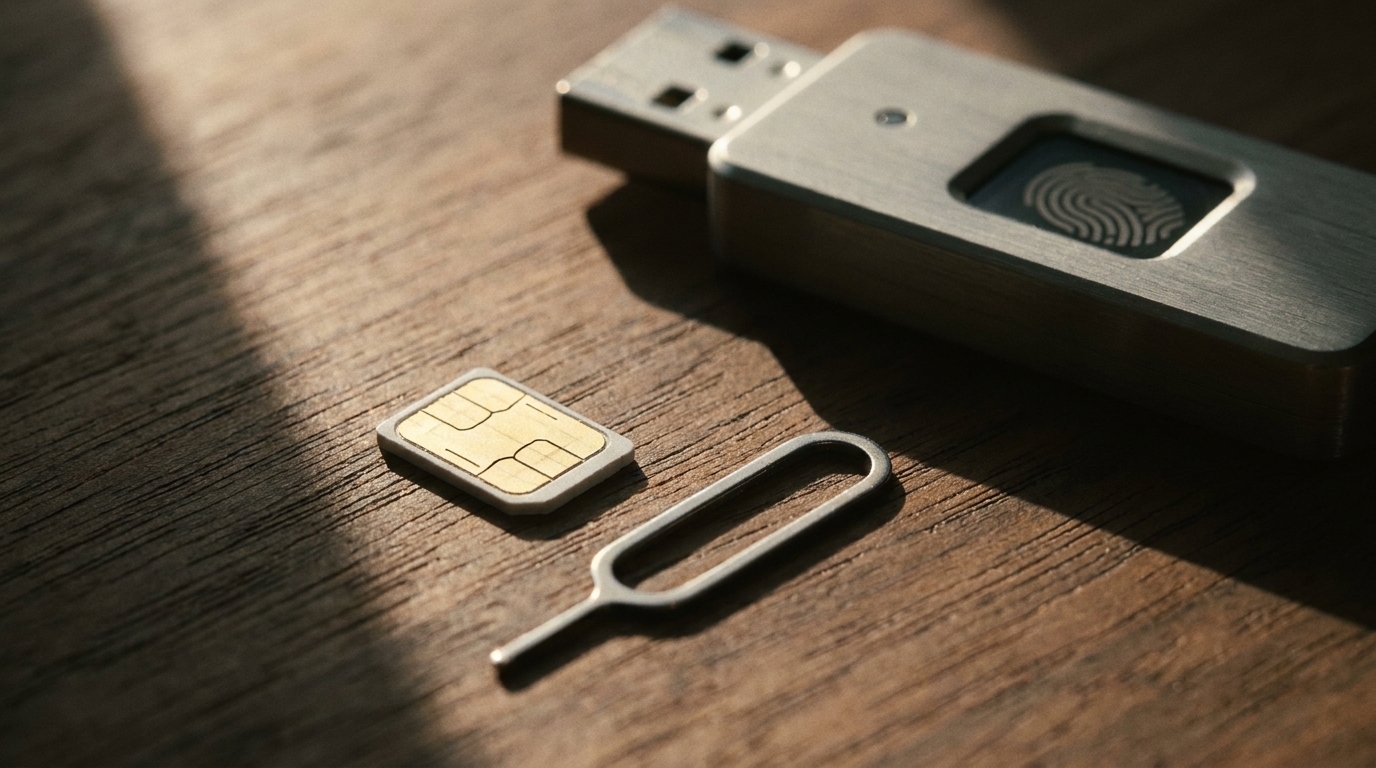
SIM-swap fraud costs South Africa over R5.3 billion annually. Discover why SMS OTPs are no longer secure or cost-effective, and how transitioning to WebAuthn passkeys can protect your enterprise and customers in 2026.
South Africa's digital economy is booming, but it carries a heavy burden. According to the Communication Risk Information Centre 2025 sector report, fraud in the telecommunications sector is costing the South African economy an estimated R5.3 billion every year. At the heart of this financial hemorrhage is a painfully familiar threat: SIM-swap fraud. For years, South African enterprises, particularly in the financial and e-commerce sectors, have relied on SMS One-Time Passwords as the gold standard for two-factor authentication. However, as cybercriminals deploy increasingly sophisticated social engineering and AI-driven tactics, the traditional SMS OTP is not just obsolete; it has become a massive liability for businesses and consumers alike.
Understanding the mechanics of SIM-swap fraud reveals exactly why SMS OTPs are failing. In a typical SIM-swap attack, a fraudster gathers personal information about a target, often through phishing, data breaches, or social media scraping. Armed with this data, the criminal contacts the victim's mobile network operator, impersonating the victim, and convinces the telecom agent to port the phone number to a new SIM card controlled by the attacker. The moment the swap is executed, the victim's phone loses network service. Meanwhile, the fraudster begins receiving all incoming calls and text messages, including the crucial SMS OTPs used to authorize bank transfers, password resets, and corporate logins.
The statistics surrounding these attacks are alarming. Recent data indicates that nearly sixty percent of all mobile banking fraud in South Africa is directly linked to SIM-swap crimes. The South African Banking Risk Information Centre has consistently highlighted the escalation of digital banking fraud, noting that criminals frequently use SIM swaps in combination with phishing for online banking passwords. Despite efforts by major telcos to tighten security protocols, the human element remains vulnerable. Telecom employees can be tricked, coerced, or even bribed by organized crime syndicates. As long as authentication relies on a phone number, the system remains fundamentally broken.
Beyond the glaring security vulnerabilities, there is a compelling financial argument against the continued use of SMS OTPs. Sending text messages is expensive. For a South African enterprise, the cost of a single bulk SMS typically ranges from twenty to thirty-five cents, depending on the volume and the provider. While this might sound negligible at first glance, the costs compound rapidly for businesses operating at scale. An e-commerce platform, a fintech startup, or a corporate portal authenticating tens of thousands of user sessions daily can easily spend hundreds of thousands of Rands annually just on SMS delivery fees. Furthermore, SMS delivery is not always reliable. Network congestion, international routing issues, and signal dead zones frequently cause delayed or undelivered OTPs, leading to user frustration, abandoned transactions, and increased customer support tickets.
The solution to this dual crisis of security and cost is WebAuthn and passkeys. Developed by the FIDO Alliance and the World Wide Web Consortium, WebAuthn is a global standard for secure, passwordless authentication. Instead of relying on a shared secret like a password or an interceptable code like an SMS OTP, WebAuthn utilizes public key cryptography. When a user registers for a service using a passkey, their device generates a unique cryptographic key pair. The public key is shared with the enterprise's server, while the private key never leaves the user's device.
To authenticate, the user simply unlocks their device using a local biometric check, such as a fingerprint scan, facial recognition, or a device PIN. The device then uses the private key to sign a challenge sent by the server. Because the private key is securely stored in the device's hardware enclave and is never transmitted over the internet, it is entirely immune to phishing, credential stuffing, and, most importantly, SIM-swap fraud. Even if a hacker successfully ports a user's phone number, they cannot access the user's accounts because they do not possess the physical device holding the cryptographic key.
By 2026, the ecosystem supporting passkeys has reached full maturity. Major technology providers have deeply integrated passkey support into their operating systems and browsers. This cross-platform synchronization means that users can seamlessly access their accounts across multiple devices without ever needing to remember a password or wait for a text message. For South African enterprises, this technological shift presents an unprecedented opportunity to overhaul their security architecture while simultaneously improving the user experience.
The transition away from SMS OTPs is already gaining momentum within the South African financial sector. Forward-thinking institutions like FNB, Capitec, TymeBank, and Discovery Bank have been aggressively pushing app-based authentication and biometric verification to bypass the vulnerabilities of the telecom network. By adopting WebAuthn, businesses of all sizes can achieve bank-grade security without forcing users to download a proprietary authenticator app. Passkeys work natively within the mobile or desktop browser, removing friction from the onboarding and login processes.
Adopting passkeys also aligns perfectly with the stringent data protection requirements of the Protection of Personal Information Act. Because passkeys eliminate the need for centralized password databases, enterprises drastically reduce their attack surface. If a company's server is breached, hackers will only find useless public keys, meaning no user credentials can be stolen or weaponized. This significantly lowers the risk of regulatory fines and reputational damage associated with data breaches. Furthermore, as AI-generated deepfakes and synthetic identity fraud become more prevalent, the localized, hardware-backed nature of passkeys provides a robust defense mechanism that cloud-based authentication simply cannot match.
For South African business owners and entrepreneurs, the mandate is clear: clinging to SMS OTPs is a losing strategy. The financial drain of telecom fees combined with the catastrophic risk of SIM-swap fraud makes legacy authentication methods unsustainable. The time to modernize is now. Implementing WebAuthn is no longer a futuristic concept reserved for Silicon Valley tech giants; it is a highly accessible, pragmatic, and necessary upgrade for any business that values its customers' security and its own bottom line.
Transitioning an enterprise to a passwordless architecture requires careful planning, robust engineering, and a deep understanding of user behavior. This is where WriteNow Agency can be an invaluable partner. As a South African software development agency specializing in custom software, web development, and AI solutions, WriteNow Agency has the expertise to help businesses seamlessly integrate WebAuthn passkeys into their existing platforms. By partnering with us, you can eradicate the threat of SIM-swap fraud, eliminate exorbitant SMS costs, and provide your users with the frictionless, secure digital experience they expect in 2026.
Understanding the mechanics of SIM-swap fraud reveals exactly why SMS OTPs are failing. In a typical SIM-swap attack, a fraudster gathers personal information about a target, often through phishing, data breaches, or social media scraping. Armed with this data, the criminal contacts the victim's mobile network operator, impersonating the victim, and convinces the telecom agent to port the phone number to a new SIM card controlled by the attacker. The moment the swap is executed, the victim's phone loses network service. Meanwhile, the fraudster begins receiving all incoming calls and text messages, including the crucial SMS OTPs used to authorize bank transfers, password resets, and corporate logins.
The statistics surrounding these attacks are alarming. Recent data indicates that nearly sixty percent of all mobile banking fraud in South Africa is directly linked to SIM-swap crimes. The South African Banking Risk Information Centre has consistently highlighted the escalation of digital banking fraud, noting that criminals frequently use SIM swaps in combination with phishing for online banking passwords. Despite efforts by major telcos to tighten security protocols, the human element remains vulnerable. Telecom employees can be tricked, coerced, or even bribed by organized crime syndicates. As long as authentication relies on a phone number, the system remains fundamentally broken.
Beyond the glaring security vulnerabilities, there is a compelling financial argument against the continued use of SMS OTPs. Sending text messages is expensive. For a South African enterprise, the cost of a single bulk SMS typically ranges from twenty to thirty-five cents, depending on the volume and the provider. While this might sound negligible at first glance, the costs compound rapidly for businesses operating at scale. An e-commerce platform, a fintech startup, or a corporate portal authenticating tens of thousands of user sessions daily can easily spend hundreds of thousands of Rands annually just on SMS delivery fees. Furthermore, SMS delivery is not always reliable. Network congestion, international routing issues, and signal dead zones frequently cause delayed or undelivered OTPs, leading to user frustration, abandoned transactions, and increased customer support tickets.
The solution to this dual crisis of security and cost is WebAuthn and passkeys. Developed by the FIDO Alliance and the World Wide Web Consortium, WebAuthn is a global standard for secure, passwordless authentication. Instead of relying on a shared secret like a password or an interceptable code like an SMS OTP, WebAuthn utilizes public key cryptography. When a user registers for a service using a passkey, their device generates a unique cryptographic key pair. The public key is shared with the enterprise's server, while the private key never leaves the user's device.
To authenticate, the user simply unlocks their device using a local biometric check, such as a fingerprint scan, facial recognition, or a device PIN. The device then uses the private key to sign a challenge sent by the server. Because the private key is securely stored in the device's hardware enclave and is never transmitted over the internet, it is entirely immune to phishing, credential stuffing, and, most importantly, SIM-swap fraud. Even if a hacker successfully ports a user's phone number, they cannot access the user's accounts because they do not possess the physical device holding the cryptographic key.
By 2026, the ecosystem supporting passkeys has reached full maturity. Major technology providers have deeply integrated passkey support into their operating systems and browsers. This cross-platform synchronization means that users can seamlessly access their accounts across multiple devices without ever needing to remember a password or wait for a text message. For South African enterprises, this technological shift presents an unprecedented opportunity to overhaul their security architecture while simultaneously improving the user experience.
The transition away from SMS OTPs is already gaining momentum within the South African financial sector. Forward-thinking institutions like FNB, Capitec, TymeBank, and Discovery Bank have been aggressively pushing app-based authentication and biometric verification to bypass the vulnerabilities of the telecom network. By adopting WebAuthn, businesses of all sizes can achieve bank-grade security without forcing users to download a proprietary authenticator app. Passkeys work natively within the mobile or desktop browser, removing friction from the onboarding and login processes.
Adopting passkeys also aligns perfectly with the stringent data protection requirements of the Protection of Personal Information Act. Because passkeys eliminate the need for centralized password databases, enterprises drastically reduce their attack surface. If a company's server is breached, hackers will only find useless public keys, meaning no user credentials can be stolen or weaponized. This significantly lowers the risk of regulatory fines and reputational damage associated with data breaches. Furthermore, as AI-generated deepfakes and synthetic identity fraud become more prevalent, the localized, hardware-backed nature of passkeys provides a robust defense mechanism that cloud-based authentication simply cannot match.
For South African business owners and entrepreneurs, the mandate is clear: clinging to SMS OTPs is a losing strategy. The financial drain of telecom fees combined with the catastrophic risk of SIM-swap fraud makes legacy authentication methods unsustainable. The time to modernize is now. Implementing WebAuthn is no longer a futuristic concept reserved for Silicon Valley tech giants; it is a highly accessible, pragmatic, and necessary upgrade for any business that values its customers' security and its own bottom line.
Transitioning an enterprise to a passwordless architecture requires careful planning, robust engineering, and a deep understanding of user behavior. This is where WriteNow Agency can be an invaluable partner. As a South African software development agency specializing in custom software, web development, and AI solutions, WriteNow Agency has the expertise to help businesses seamlessly integrate WebAuthn passkeys into their existing platforms. By partnering with us, you can eradicate the threat of SIM-swap fraud, eliminate exorbitant SMS costs, and provide your users with the frictionless, secure digital experience they expect in 2026.


Comments (0)
Leave a Comment