

WhatsApp-to-ERP: Digitizing SA's R900Bn Township Economy
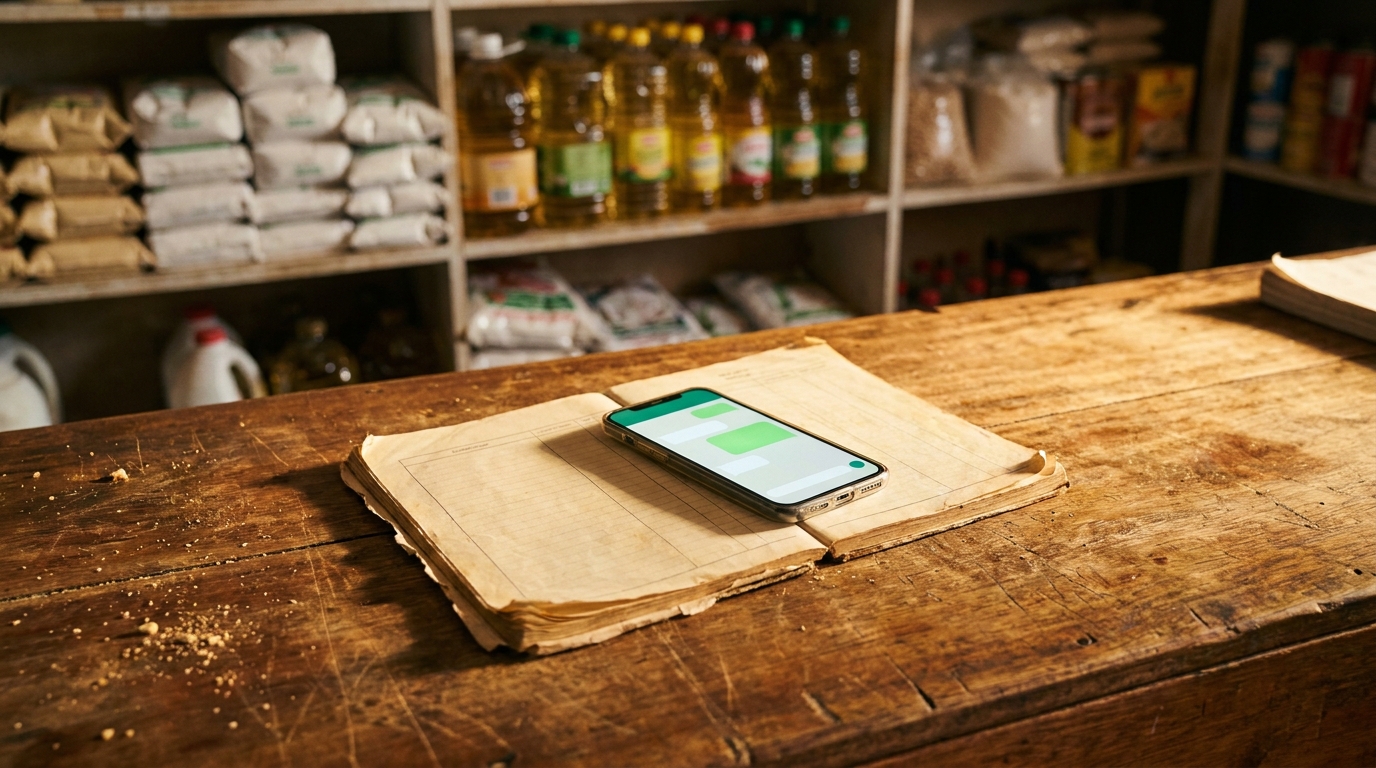
Discover how South African wholesalers are unlocking the R900 billion township economy by integrating WhatsApp ordering with their ERP systems. Learn how custom AI solutions empower spaza shops and streamline B2B distribution.
South Africa’s township economy is a vibrant, R900 billion engine of inclusive growth. For decades, it has been the heartbeat of local communities, driven by resilient entrepreneurs, street traders, and spaza shop owners. Recent estimates highlight that this sector serves over 21 million consumers across more than 530 townships. Yet, despite its massive scale and undeniable purchasing power, the informal retail sector remains largely disconnected from the automated digital supply chains that power formal retail. For South African wholesalers, FMCG distributors, and cash-and-carry businesses, this represents one of the most significant untapped opportunities of the decade. The key to unlocking it does not lie in forcing informal retailers to adopt complex corporate technology, but in meeting them exactly where they already are: on WhatsApp.
The traditional wholesale ordering process in the township economy is heavily reliant on manual intervention. Spaza shop owners typically have to close their shops, spend money on transport, and stand in long queues at wholesale depots to secure stock. Alternatively, they rely on field sales agents and fragmented phone calls or handwritten notes. For the wholesaler, this manual process is equally painful. Sales administrators spend hours re-entering orders into accounting systems, leading to costly data entry errors, delayed deliveries, and poor inventory visibility. While many B2B distributors have attempted to launch proprietary mobile apps or web portals, these initiatives often suffer from low adoption rates. Informal retailers operate in a resource-constrained environment where smartphone storage space is limited and mobile data is expensive. Asking a spaza owner to download a large app and navigate a complex interface is a recipe for friction.
This is where the WhatsApp Business API fundamentally changes the game. With over 28 million daily active users in South Africa, WhatsApp is the undisputed king of digital communication. It is a zero-friction environment. Spaza shop owners already use it daily to coordinate community groups and communicate with customers. By building custom WhatsApp-to-ERP ordering platforms, forward-thinking wholesalers are turning a simple chat interface into a powerful, automated B2B e-commerce channel. The premise is simple but revolutionary: allow the retailer to place a bulk order simply by sending a text message or a voice note, and use artificial intelligence to translate that message into a structured order that flows directly into the wholesaler’s backend system.
How does a WhatsApp-to-ERP ordering platform actually work in practice? It begins when a registered spaza shop owner sends a message to the wholesaler’s verified WhatsApp Business number. They might type a simple list, such as 10 loaves of brown bread, 5 bottles of cooking oil, and 2 bags of maize meal, or even send a voice note in their preferred local language. Behind the scenes, an AI-powered natural language processing engine interprets the message. The system instantly identifies the customer profile, checks the specific pricing tier or discounts assigned to that retailer, and queries the wholesaler’s Enterprise Resource Planning (ERP) system in real-time to confirm stock availability.
Once the system validates the request, the WhatsApp bot replies instantly with a formalized quote, including the total cost and estimated delivery time. The spaza owner confirms the order with a simple affirmative response or a tap of a button. Immediately, the order is pushed via API directly into the wholesaler’s ERP, whether that is Sage, Xero, SAP, or Odoo. No human data entry is required. The warehouse team receives the picking slip, the finance team receives the invoice record, and the customer receives an automated payment link or a confirmation for cash-on-delivery. This seamless loop eliminates the need for double-entry, drastically reduces administrative overhead, and allows field sales agents to focus on relationship building rather than order capturing.
The impact of this technology is already being felt across the South African retail landscape. Innovators and local startups like Vuleka and Jinjer have demonstrated the viability of digitizing the informal supply chain. Recent data from the 2026 Meta Impact Report in South Africa revealed that over 900,000 small and medium enterprises are using Meta’s platforms to grow their businesses, with WhatsApp Business acting as core infrastructure. The report noted that informal traders are using these tools to operate with the efficiency of formal businesses, bridging the gap between Sandton-based corporate suppliers and Soweto-based spaza shops. When wholesalers integrate these conversational interfaces with their robust backend systems, they create a local value loop that strengthens the entire ecosystem.
Beyond simple order taking, a custom WhatsApp-to-ERP integration unlocks powerful marketing and customer retention capabilities. Wholesalers can utilize the WhatsApp Business API to send targeted, rich-media broadcast messages about daily deals, new product arrivals, or bulk discounts. Because WhatsApp boasts an open rate that dramatically outperforms traditional email or SMS marketing, these promotions are seen almost instantly. Furthermore, the integration allows wholesalers to collect invaluable data on purchasing patterns within the township economy. By analyzing this data, distributors can optimize inventory forecasting, tailor product offerings to specific neighborhoods, and offer dynamic pricing or loyalty rewards to their best customers.
However, building a robust, enterprise-grade WhatsApp ordering system requires more than just signing up for a basic WhatsApp Business account. It requires a deep understanding of API architecture, secure data handling, and complex ERP integrations. The system must be capable of handling peak order volumes, managing out-of-stock scenarios gracefully, and complying with the Protection of Personal Information Act (POPIA). It also requires an intuitive conversational design that feels natural to the user, incorporating localized language support and intelligent fallback mechanisms when the AI encounters an ambiguous request. This is not an off-the-shelf software purchase; it is a strategic digital transformation project that requires the right technical expertise.
This is where partnering with an experienced software development agency becomes critical. WriteNow Agency, a South African software development agency specializing in Custom Software, Web Development, Business Automation, and AI Solutions, is uniquely positioned to help wholesalers navigate this transition. By leveraging deep local market knowledge and advanced technical capabilities, WriteNow Agency builds bespoke WhatsApp-to-ERP integrations tailored to the specific operational workflows of South African distributors. Whether you are running Sage, Xero, or a legacy enterprise system, a custom-built solution ensures that your data flows seamlessly, securely, and instantly from the township street corner to your warehouse floor.
The R900 billion township economy is no longer just a parallel market; it is the frontier of South African retail innovation. As digital infrastructure improves and mobile adoption continues to deepen, the line between formal and informal trade will increasingly blur. Wholesalers who cling to manual processes and paper-based ordering will inevitably lose market share to those who embrace conversational commerce. By digitizing the supply chain through WhatsApp and intelligent ERP integration, businesses can reduce costs, increase sales velocity, and build lasting loyalty with the community-based retailers who form the backbone of the national economy. The technology is available, the market is ready, and the opportunity is waiting for those bold enough to build the future of B2B retail.
The traditional wholesale ordering process in the township economy is heavily reliant on manual intervention. Spaza shop owners typically have to close their shops, spend money on transport, and stand in long queues at wholesale depots to secure stock. Alternatively, they rely on field sales agents and fragmented phone calls or handwritten notes. For the wholesaler, this manual process is equally painful. Sales administrators spend hours re-entering orders into accounting systems, leading to costly data entry errors, delayed deliveries, and poor inventory visibility. While many B2B distributors have attempted to launch proprietary mobile apps or web portals, these initiatives often suffer from low adoption rates. Informal retailers operate in a resource-constrained environment where smartphone storage space is limited and mobile data is expensive. Asking a spaza owner to download a large app and navigate a complex interface is a recipe for friction.
This is where the WhatsApp Business API fundamentally changes the game. With over 28 million daily active users in South Africa, WhatsApp is the undisputed king of digital communication. It is a zero-friction environment. Spaza shop owners already use it daily to coordinate community groups and communicate with customers. By building custom WhatsApp-to-ERP ordering platforms, forward-thinking wholesalers are turning a simple chat interface into a powerful, automated B2B e-commerce channel. The premise is simple but revolutionary: allow the retailer to place a bulk order simply by sending a text message or a voice note, and use artificial intelligence to translate that message into a structured order that flows directly into the wholesaler’s backend system.
How does a WhatsApp-to-ERP ordering platform actually work in practice? It begins when a registered spaza shop owner sends a message to the wholesaler’s verified WhatsApp Business number. They might type a simple list, such as 10 loaves of brown bread, 5 bottles of cooking oil, and 2 bags of maize meal, or even send a voice note in their preferred local language. Behind the scenes, an AI-powered natural language processing engine interprets the message. The system instantly identifies the customer profile, checks the specific pricing tier or discounts assigned to that retailer, and queries the wholesaler’s Enterprise Resource Planning (ERP) system in real-time to confirm stock availability.
Once the system validates the request, the WhatsApp bot replies instantly with a formalized quote, including the total cost and estimated delivery time. The spaza owner confirms the order with a simple affirmative response or a tap of a button. Immediately, the order is pushed via API directly into the wholesaler’s ERP, whether that is Sage, Xero, SAP, or Odoo. No human data entry is required. The warehouse team receives the picking slip, the finance team receives the invoice record, and the customer receives an automated payment link or a confirmation for cash-on-delivery. This seamless loop eliminates the need for double-entry, drastically reduces administrative overhead, and allows field sales agents to focus on relationship building rather than order capturing.
The impact of this technology is already being felt across the South African retail landscape. Innovators and local startups like Vuleka and Jinjer have demonstrated the viability of digitizing the informal supply chain. Recent data from the 2026 Meta Impact Report in South Africa revealed that over 900,000 small and medium enterprises are using Meta’s platforms to grow their businesses, with WhatsApp Business acting as core infrastructure. The report noted that informal traders are using these tools to operate with the efficiency of formal businesses, bridging the gap between Sandton-based corporate suppliers and Soweto-based spaza shops. When wholesalers integrate these conversational interfaces with their robust backend systems, they create a local value loop that strengthens the entire ecosystem.
Beyond simple order taking, a custom WhatsApp-to-ERP integration unlocks powerful marketing and customer retention capabilities. Wholesalers can utilize the WhatsApp Business API to send targeted, rich-media broadcast messages about daily deals, new product arrivals, or bulk discounts. Because WhatsApp boasts an open rate that dramatically outperforms traditional email or SMS marketing, these promotions are seen almost instantly. Furthermore, the integration allows wholesalers to collect invaluable data on purchasing patterns within the township economy. By analyzing this data, distributors can optimize inventory forecasting, tailor product offerings to specific neighborhoods, and offer dynamic pricing or loyalty rewards to their best customers.
However, building a robust, enterprise-grade WhatsApp ordering system requires more than just signing up for a basic WhatsApp Business account. It requires a deep understanding of API architecture, secure data handling, and complex ERP integrations. The system must be capable of handling peak order volumes, managing out-of-stock scenarios gracefully, and complying with the Protection of Personal Information Act (POPIA). It also requires an intuitive conversational design that feels natural to the user, incorporating localized language support and intelligent fallback mechanisms when the AI encounters an ambiguous request. This is not an off-the-shelf software purchase; it is a strategic digital transformation project that requires the right technical expertise.
This is where partnering with an experienced software development agency becomes critical. WriteNow Agency, a South African software development agency specializing in Custom Software, Web Development, Business Automation, and AI Solutions, is uniquely positioned to help wholesalers navigate this transition. By leveraging deep local market knowledge and advanced technical capabilities, WriteNow Agency builds bespoke WhatsApp-to-ERP integrations tailored to the specific operational workflows of South African distributors. Whether you are running Sage, Xero, or a legacy enterprise system, a custom-built solution ensures that your data flows seamlessly, securely, and instantly from the township street corner to your warehouse floor.
The R900 billion township economy is no longer just a parallel market; it is the frontier of South African retail innovation. As digital infrastructure improves and mobile adoption continues to deepen, the line between formal and informal trade will increasingly blur. Wholesalers who cling to manual processes and paper-based ordering will inevitably lose market share to those who embrace conversational commerce. By digitizing the supply chain through WhatsApp and intelligent ERP integration, businesses can reduce costs, increase sales velocity, and build lasting loyalty with the community-based retailers who form the backbone of the national economy. The technology is available, the market is ready, and the opportunity is waiting for those bold enough to build the future of B2B retail.


Comments (0)
Leave a Comment