

Smart Factories SA: ROI of MES, IoT & Predictive Maintenance
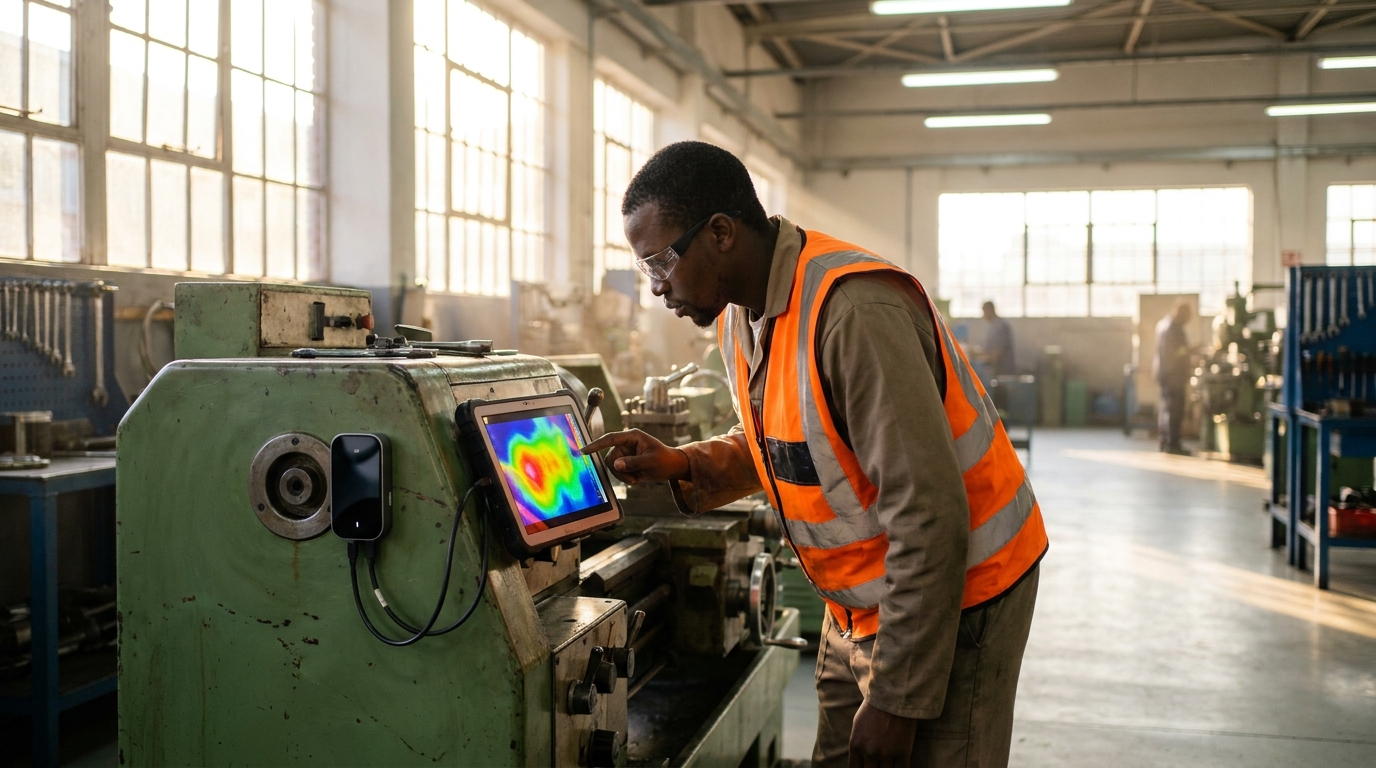
Discover how South African mid-tier manufacturers are leveraging Cloud MES, IoT sensors, and predictive maintenance to overcome local challenges, reduce downtime by up to 40%, and achieve practical ROI in 2026.
The South African manufacturing sector has long been a cornerstone of the national economy, contributing roughly 12.5 percent to the GDP. However, recent years have tested the resilience of local factory owners. According to PwC's South Africa 2025 Manufacturing Analysis, the industry is navigating a critical juncture. Mid-tier manufacturers face rising operational costs, pressure from cheaper imported goods, and lingering logistical bottlenecks. Yet, the same report highlights a powerful silver lining: resilience fueled by technological innovation. As we move deeper into 2026, automation is no longer a luxury reserved for massive multinational corporations. Mid-tier factories are aggressively adopting targeted, cost-effective digital tools to protect their margins and scale operations.
Historically, industrial automation conjured images of multi-million Rand robotic assembly lines. For a mid-sized food processing plant in the Western Cape or an automotive parts manufacturer in the Eastern Cape, that level of investment was often out of reach. Today, the narrative has shifted from heavy robotics to data-driven agility. The focus is on extracting maximum value from existing machinery by making it smarter. This pragmatic approach centers on three core technologies: Manufacturing Execution Systems, Internet of Things sensors, and predictive maintenance algorithms. Together, these tools form a digital ecosystem that delivers measurable Return on Investment without requiring a complete factory overhaul.
A Manufacturing Execution System, or MES, acts as the digital nervous system of a factory floor. It bridges the gap between enterprise resource planning software in the boardroom and the actual machines doing the work. In the past, implementing an on-premise MES could cost upwards of ten million Rand, effectively locking out mid-tier players. However, the landscape in 2026 is dominated by Cloud and Software-as-a-Service models. These modern platforms have drastically lowered the barrier to entry, allowing South African SMEs to subscribe to powerful production management tools for a fraction of the traditional cost.
The practical ROI of an MES is immediate and highly visible. By replacing manual, paper-based batch records with real-time digital tracking, factories eliminate human error and bottlenecking. Plant managers gain instant visibility into production throughput, material waste, and quality control metrics. For example, if a packaging line slows down, the MES flags the inefficiency in real-time, allowing supervisors to intervene before the shift misses its quota. This operational transparency directly translates to higher yield and lower material waste, providing a rapid payback period for mid-tier operators on tight margins.
An MES is only as good as the data feeding into it. This is where Internet of Things, or IoT, sensors come into play. South African factories are filled with legacy equipment built decades before the internet era. Ripping and replacing these machines is economically unviable. Instead, local manufacturers are retrofitting their existing assets with low-cost, low-power IoT sensors. Utilizing networks like LoRaWAN, these small devices can be attached to older motors, conveyors, and pumps to monitor vital signs such as temperature, vibration, and energy consumption.
The deployment of industrial IoT in Africa is accelerating rapidly. Recent rollouts of retrofittable, ATEX-certified wireless sensors across South African industrial sites demonstrate how easily older infrastructure can be digitized. These sensors provide a continuous stream of real-time data from the factory floor directly to cloud servers. Factory owners can now track the exact energy draw of specific production lines, identifying inefficiencies that contribute to exorbitant electricity bills. In an environment where energy costs remain a significant burden, optimizing power consumption at the machine level is a direct boost to the bottom line.
The true transformative power of IoT data is realized through predictive maintenance. In traditional manufacturing, maintenance is either reactive, meaning you fix a machine when it breaks, or preventive, meaning you service it on a strict calendar schedule. Both approaches are deeply flawed. Reactive maintenance leads to catastrophic, unplanned downtime. Preventive maintenance often results in replacing perfectly good parts and wasting valuable labor hours. Predictive maintenance leverages artificial intelligence and machine learning to find the perfect middle ground.
As the saying goes in industrial engineering, machines whisper before they scream. Long before a critical motor fails, it will exhibit subtle changes like a microscopic increase in vibration, a slight spike in operating temperature, or a minor voltage drop. IoT sensors pick up these whispers, and predictive maintenance algorithms analyze the patterns to forecast exactly when a component will fail. By alerting the maintenance team days in advance, repairs can be scheduled during planned downtime or shift changes.
The financial impact of predictive maintenance in South African facilities is profound. Industry data shows that implementing AI-driven predictive maintenance can reduce unplanned equipment downtime by twenty to forty percent. For a mid-tier automotive supplier, avoiding just one unexpected halt on the assembly line can save hundreds of thousands of Rands in lost productivity. Furthermore, because technicians are only servicing machines that actually require attention, labor resources are optimized, and the lifespan of expensive capital equipment is significantly extended. It replaces firefighting with foresight.
Adopting these technologies also positions South African mid-tier manufacturers to take full advantage of broader economic opportunities. As highlighted at the 2026 Manufacturing Indaba, the African Continental Free Trade Area presents a massive opportunity for local factories to expand their export footprint. However, competing on a pan-African scale requires strict adherence to quality standards and highly competitive pricing. Automation, driven by MES, IoT, and AI, provides the foundational efficiency required to scale up production and meet these international demands without proportionally increasing overhead costs.
Despite the clear benefits, digital transformation is not without its hurdles. Mid-tier factories often face challenges related to digital skills shortages, integration with legacy systems, and data security. Successful implementation requires a strategic approach to change management. This is why partnering with local technology experts who understand the unique constraints of the South African industrial landscape is crucial. A phased approach, starting with a few critical sensors on bottleneck machines and gradually scaling up to a full cloud MES, allows businesses to prove ROI before committing further capital.
At WriteNow Agency, we understand that technology should serve your business, not complicate it. As a South African software development agency specializing in custom software, business automation, and AI solutions, we help mid-tier manufacturers bridge the gap between their physical operations and digital potential. Whether you need custom dashboards to visualize IoT data, integration services to connect a new MES with existing software, or AI algorithms for predictive maintenance, our team can guide your transformation. Embracing smart factory technologies is a practical, profitable reality for South Africa's manufacturing sector today.
Historically, industrial automation conjured images of multi-million Rand robotic assembly lines. For a mid-sized food processing plant in the Western Cape or an automotive parts manufacturer in the Eastern Cape, that level of investment was often out of reach. Today, the narrative has shifted from heavy robotics to data-driven agility. The focus is on extracting maximum value from existing machinery by making it smarter. This pragmatic approach centers on three core technologies: Manufacturing Execution Systems, Internet of Things sensors, and predictive maintenance algorithms. Together, these tools form a digital ecosystem that delivers measurable Return on Investment without requiring a complete factory overhaul.
A Manufacturing Execution System, or MES, acts as the digital nervous system of a factory floor. It bridges the gap between enterprise resource planning software in the boardroom and the actual machines doing the work. In the past, implementing an on-premise MES could cost upwards of ten million Rand, effectively locking out mid-tier players. However, the landscape in 2026 is dominated by Cloud and Software-as-a-Service models. These modern platforms have drastically lowered the barrier to entry, allowing South African SMEs to subscribe to powerful production management tools for a fraction of the traditional cost.
The practical ROI of an MES is immediate and highly visible. By replacing manual, paper-based batch records with real-time digital tracking, factories eliminate human error and bottlenecking. Plant managers gain instant visibility into production throughput, material waste, and quality control metrics. For example, if a packaging line slows down, the MES flags the inefficiency in real-time, allowing supervisors to intervene before the shift misses its quota. This operational transparency directly translates to higher yield and lower material waste, providing a rapid payback period for mid-tier operators on tight margins.
An MES is only as good as the data feeding into it. This is where Internet of Things, or IoT, sensors come into play. South African factories are filled with legacy equipment built decades before the internet era. Ripping and replacing these machines is economically unviable. Instead, local manufacturers are retrofitting their existing assets with low-cost, low-power IoT sensors. Utilizing networks like LoRaWAN, these small devices can be attached to older motors, conveyors, and pumps to monitor vital signs such as temperature, vibration, and energy consumption.
The deployment of industrial IoT in Africa is accelerating rapidly. Recent rollouts of retrofittable, ATEX-certified wireless sensors across South African industrial sites demonstrate how easily older infrastructure can be digitized. These sensors provide a continuous stream of real-time data from the factory floor directly to cloud servers. Factory owners can now track the exact energy draw of specific production lines, identifying inefficiencies that contribute to exorbitant electricity bills. In an environment where energy costs remain a significant burden, optimizing power consumption at the machine level is a direct boost to the bottom line.
The true transformative power of IoT data is realized through predictive maintenance. In traditional manufacturing, maintenance is either reactive, meaning you fix a machine when it breaks, or preventive, meaning you service it on a strict calendar schedule. Both approaches are deeply flawed. Reactive maintenance leads to catastrophic, unplanned downtime. Preventive maintenance often results in replacing perfectly good parts and wasting valuable labor hours. Predictive maintenance leverages artificial intelligence and machine learning to find the perfect middle ground.
As the saying goes in industrial engineering, machines whisper before they scream. Long before a critical motor fails, it will exhibit subtle changes like a microscopic increase in vibration, a slight spike in operating temperature, or a minor voltage drop. IoT sensors pick up these whispers, and predictive maintenance algorithms analyze the patterns to forecast exactly when a component will fail. By alerting the maintenance team days in advance, repairs can be scheduled during planned downtime or shift changes.
The financial impact of predictive maintenance in South African facilities is profound. Industry data shows that implementing AI-driven predictive maintenance can reduce unplanned equipment downtime by twenty to forty percent. For a mid-tier automotive supplier, avoiding just one unexpected halt on the assembly line can save hundreds of thousands of Rands in lost productivity. Furthermore, because technicians are only servicing machines that actually require attention, labor resources are optimized, and the lifespan of expensive capital equipment is significantly extended. It replaces firefighting with foresight.
Adopting these technologies also positions South African mid-tier manufacturers to take full advantage of broader economic opportunities. As highlighted at the 2026 Manufacturing Indaba, the African Continental Free Trade Area presents a massive opportunity for local factories to expand their export footprint. However, competing on a pan-African scale requires strict adherence to quality standards and highly competitive pricing. Automation, driven by MES, IoT, and AI, provides the foundational efficiency required to scale up production and meet these international demands without proportionally increasing overhead costs.
Despite the clear benefits, digital transformation is not without its hurdles. Mid-tier factories often face challenges related to digital skills shortages, integration with legacy systems, and data security. Successful implementation requires a strategic approach to change management. This is why partnering with local technology experts who understand the unique constraints of the South African industrial landscape is crucial. A phased approach, starting with a few critical sensors on bottleneck machines and gradually scaling up to a full cloud MES, allows businesses to prove ROI before committing further capital.
At WriteNow Agency, we understand that technology should serve your business, not complicate it. As a South African software development agency specializing in custom software, business automation, and AI solutions, we help mid-tier manufacturers bridge the gap between their physical operations and digital potential. Whether you need custom dashboards to visualize IoT data, integration services to connect a new MES with existing software, or AI algorithms for predictive maintenance, our team can guide your transformation. Embracing smart factory technologies is a practical, profitable reality for South Africa's manufacturing sector today.


Comments (0)
Leave a Comment