

May 2026 AI News: Latest Models & Tools for SA Businesses
Discover the latest AI news, model releases, and tools from May 2026. From Google's agentic Gemini era to OpenAI's GPT-5.5 and on-premises enterprise solutions, learn how South African businesses can leverage these breakthroughs to scale.
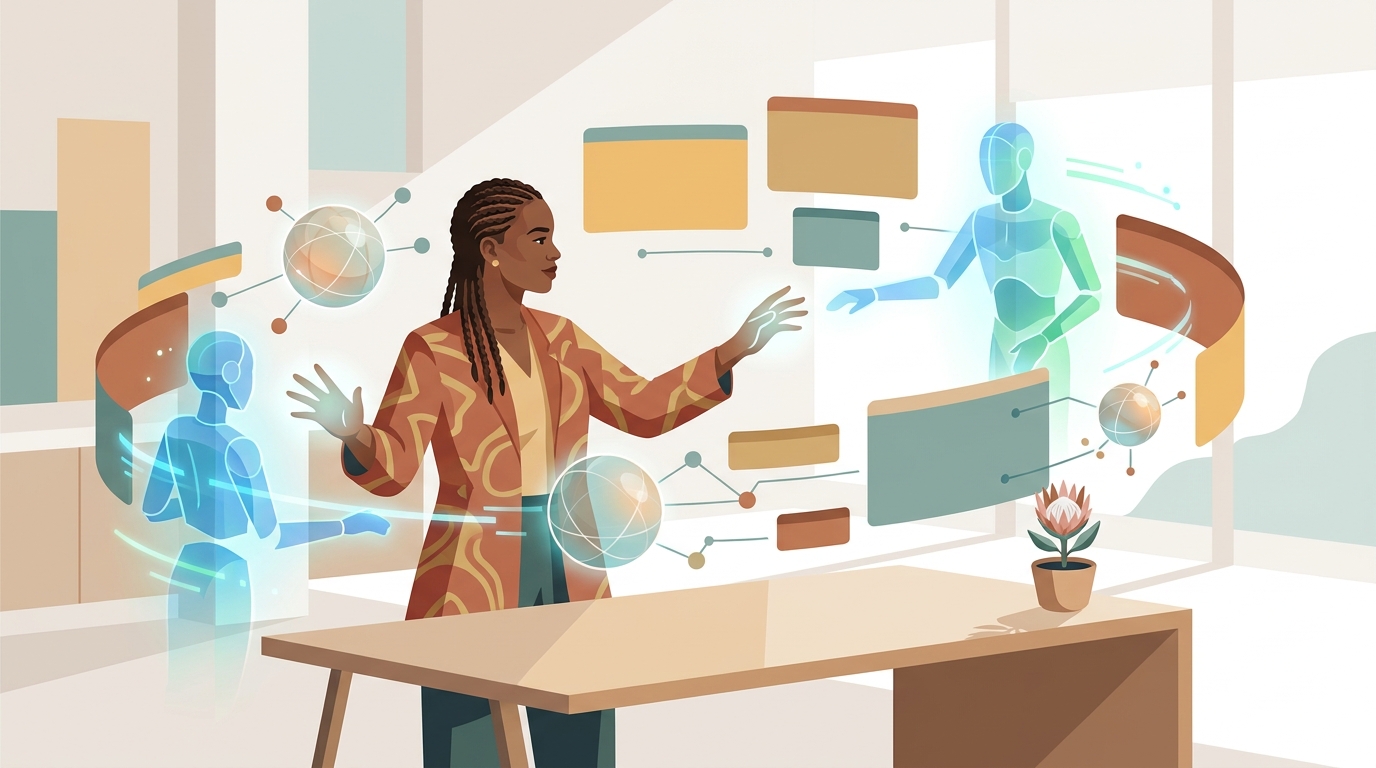
The landscape of artificial intelligence shifted dramatically in May 2026, moving away from simple generative chatbots toward fully autonomous, agentic systems. For South African business owners and entrepreneurs, this evolution presents an unprecedented opportunity to scale operations, automate complex workflows, and compete on a global stage without needing massive capital overhead. The narrative has changed from asking what artificial intelligence can write, to what it can actually do on your behalf. As we unpack the latest AI news, model releases, and tools launched in May 2026, it becomes clear that the focus is now on practical deployment, cost efficiency, and enterprise-grade security.
Google dominated the headlines midway through the month with its highly anticipated I/O 2026 developer conference, officially ushering in what CEO Sundar Pichai called the agentic Gemini era. The tech giant unveiled the Gemini 3.5 series, including Gemini 3.5 Flash, Gemini Omni, and the all-new Gemini Spark. Rather than just answering queries, these models are designed to act as personalized information agents that work tirelessly in the background to complete tasks, monitor data, and execute actions. Google also introduced Antigravity 2.0, an agent-first development platform that allows businesses to spin up specialized sub-agents for complex workflows with built-in sandbox security. Furthermore, the announcement of Android XR smart glasses integrating seamlessly with these models signals a new frontier in spatial computing. For local entrepreneurs, this means the ability to create dynamic, custom mini-apps directly within Search, fundamentally changing how consumers interact with digital storefronts and immersive services.
Not to be outdone, OpenAI made significant strides with both its product offerings and its enterprise strategy. May 2026 saw GPT-5.5 Instant become the new default model, bringing lightning-fast, highly capable reasoning to everyday users, while the flagship GPT-5.5 continued to dominate agentic coding benchmarks. More importantly for corporate entities, OpenAI announced a landmark partnership with Dell Technologies to bring Codex to hybrid and on-premises enterprise environments. This is a massive game-changer for South African enterprises bound by strict data privacy and compliance laws, as it allows them to deploy advanced artificial intelligence agents securely within their own localized infrastructure. Furthermore, OpenAI demonstrated the raw cognitive power of its latest models by successfully disproving an eighty-year-old discrete geometry conjecture originally posed by mathematician Paul Erdős, signaling a historic breakthrough in true machine reasoning and scientific discovery.
With these rapid advancements, concerns about workforce displacement have naturally intensified. However, OpenAI CEO Sam Altman addressed these fears directly in May, stating that the technology has not triggered the global jobs apocalypse many predicted. Instead of eliminating white-collar entry-level roles entirely, the technology is automating specific tasks, allowing employees to focus on higher-value work. To support this transition, the OpenAI Foundation committed two hundred and fifty million dollars to help workers and economies navigate the disruption. For South African business leaders, the takeaway is clear: the goal should be workforce augmentation, empowering your existing teams with these new tools rather than viewing them purely as a means to reduce headcount.
While the massive proprietary models capture mainstream attention, the open-weight and cost-effective model ecosystem saw equally thrilling developments this month. DeepSeek made waves by announcing that the promotional pricing for its V4-Pro model would become permanent, settling at incredibly low rates of just under fifty cents per million input tokens. Given the current economic climate and the exchange rate of the Rand, having access to a top-tier coding model at a fraction of the cost of its competitors is a massive win for local developers and startups. Simultaneously, Alibaba released a preview of Qwen 3.7-Max, which is already dominating academic and reasoning benchmarks, proving that high-quality artificial intelligence is becoming increasingly accessible and democratized.
Enterprise cloud providers are also racing to make these tools easier to implement. Oracle Cloud Infrastructure rolled out major updates in May, integrating cutting-edge models like Grok 4.3 and NVIDIA Nemotron 3 Nano Omni into their Enterprise AI suite. A standout example from these updates was the emphasis on sovereign artificial intelligence platforms, highlighted by SoftBank's localized deployment in Japan. By allowing companies to run generative models within localized data centers, providers are solving one of the biggest hurdles for regulated industries. For South African financial and healthcare sectors governed by the Protection of Personal Information Act, sovereign cloud solutions ensure that sensitive data never leaves the country while still benefiting from world-class machine learning capabilities.
Amidst the technical releases, Anthropic took a distinctively philosophical approach to the month's news. The company published a profound document reflecting on the ethical implications of next-generation models, noting that these systems are not simply engineered like traditional software, but are grown from human thought and speech. Anthropic's leadership emphasized that the questions raised by these technologies extend far beyond computer science, requiring input from diverse cultures and ethical frameworks. This serves as a vital reminder for businesses that as we integrate autonomous agents into our customer service and decision-making processes, maintaining a human-centric, ethical approach is essential for long-term brand trust and sustainability.
The overarching theme of May 2026 is the transition from theoretical experimentation to operational reality. We are seeing the launch of developer-focused tools like the Grok Build command-line interface beta by xAI and Cursor's Composer 2.5, which drastically reduce the time it takes to build, test, and deploy software. Additionally, updates to educational technology platforms, such as the deployment of AI-native personalized study recommendations, show that these systems are infiltrating every sector. For the South African entrepreneur, this means the barrier to entry for creating custom digital solutions has never been lower. Whether you are looking to automate your supply chain, build an intelligent customer portal, or optimize your internal data analysis, the models and frameworks released this month provide the exact infrastructure needed to turn those ideas into functional, scalable products in record time.
Navigating this rapidly expanding ecosystem can be daunting, but you do not have to do it alone. At WriteNow Agency, we specialize in helping South African businesses harness the power of Custom Software, Web Development, Business Automation, and AI Solutions. Our team stays at the forefront of these exact developments, ensuring that whether you need to integrate Google's agentic Gemini tools, deploy OpenAI's Codex on-premises, or leverage cost-effective models like DeepSeek V4-Pro, we can build a tailored solution that drives real growth for your company. We bridge the gap between cutting-edge global technology and practical, local business needs.
As we look toward the second half of the year, the momentum of the artificial intelligence industry shows no signs of slowing down. The releases of May 2026 have laid the groundwork for a future where digital agents work alongside us, handling the mundane and empowering us to tackle the complex. South African businesses that embrace these tools today will not only streamline their operations but will secure a definitive competitive advantage in an increasingly automated world. The tools are here, they are more affordable than ever, and the time to build is now.
Google dominated the headlines midway through the month with its highly anticipated I/O 2026 developer conference, officially ushering in what CEO Sundar Pichai called the agentic Gemini era. The tech giant unveiled the Gemini 3.5 series, including Gemini 3.5 Flash, Gemini Omni, and the all-new Gemini Spark. Rather than just answering queries, these models are designed to act as personalized information agents that work tirelessly in the background to complete tasks, monitor data, and execute actions. Google also introduced Antigravity 2.0, an agent-first development platform that allows businesses to spin up specialized sub-agents for complex workflows with built-in sandbox security. Furthermore, the announcement of Android XR smart glasses integrating seamlessly with these models signals a new frontier in spatial computing. For local entrepreneurs, this means the ability to create dynamic, custom mini-apps directly within Search, fundamentally changing how consumers interact with digital storefronts and immersive services.
Not to be outdone, OpenAI made significant strides with both its product offerings and its enterprise strategy. May 2026 saw GPT-5.5 Instant become the new default model, bringing lightning-fast, highly capable reasoning to everyday users, while the flagship GPT-5.5 continued to dominate agentic coding benchmarks. More importantly for corporate entities, OpenAI announced a landmark partnership with Dell Technologies to bring Codex to hybrid and on-premises enterprise environments. This is a massive game-changer for South African enterprises bound by strict data privacy and compliance laws, as it allows them to deploy advanced artificial intelligence agents securely within their own localized infrastructure. Furthermore, OpenAI demonstrated the raw cognitive power of its latest models by successfully disproving an eighty-year-old discrete geometry conjecture originally posed by mathematician Paul Erdős, signaling a historic breakthrough in true machine reasoning and scientific discovery.
With these rapid advancements, concerns about workforce displacement have naturally intensified. However, OpenAI CEO Sam Altman addressed these fears directly in May, stating that the technology has not triggered the global jobs apocalypse many predicted. Instead of eliminating white-collar entry-level roles entirely, the technology is automating specific tasks, allowing employees to focus on higher-value work. To support this transition, the OpenAI Foundation committed two hundred and fifty million dollars to help workers and economies navigate the disruption. For South African business leaders, the takeaway is clear: the goal should be workforce augmentation, empowering your existing teams with these new tools rather than viewing them purely as a means to reduce headcount.
While the massive proprietary models capture mainstream attention, the open-weight and cost-effective model ecosystem saw equally thrilling developments this month. DeepSeek made waves by announcing that the promotional pricing for its V4-Pro model would become permanent, settling at incredibly low rates of just under fifty cents per million input tokens. Given the current economic climate and the exchange rate of the Rand, having access to a top-tier coding model at a fraction of the cost of its competitors is a massive win for local developers and startups. Simultaneously, Alibaba released a preview of Qwen 3.7-Max, which is already dominating academic and reasoning benchmarks, proving that high-quality artificial intelligence is becoming increasingly accessible and democratized.
Enterprise cloud providers are also racing to make these tools easier to implement. Oracle Cloud Infrastructure rolled out major updates in May, integrating cutting-edge models like Grok 4.3 and NVIDIA Nemotron 3 Nano Omni into their Enterprise AI suite. A standout example from these updates was the emphasis on sovereign artificial intelligence platforms, highlighted by SoftBank's localized deployment in Japan. By allowing companies to run generative models within localized data centers, providers are solving one of the biggest hurdles for regulated industries. For South African financial and healthcare sectors governed by the Protection of Personal Information Act, sovereign cloud solutions ensure that sensitive data never leaves the country while still benefiting from world-class machine learning capabilities.
Amidst the technical releases, Anthropic took a distinctively philosophical approach to the month's news. The company published a profound document reflecting on the ethical implications of next-generation models, noting that these systems are not simply engineered like traditional software, but are grown from human thought and speech. Anthropic's leadership emphasized that the questions raised by these technologies extend far beyond computer science, requiring input from diverse cultures and ethical frameworks. This serves as a vital reminder for businesses that as we integrate autonomous agents into our customer service and decision-making processes, maintaining a human-centric, ethical approach is essential for long-term brand trust and sustainability.
The overarching theme of May 2026 is the transition from theoretical experimentation to operational reality. We are seeing the launch of developer-focused tools like the Grok Build command-line interface beta by xAI and Cursor's Composer 2.5, which drastically reduce the time it takes to build, test, and deploy software. Additionally, updates to educational technology platforms, such as the deployment of AI-native personalized study recommendations, show that these systems are infiltrating every sector. For the South African entrepreneur, this means the barrier to entry for creating custom digital solutions has never been lower. Whether you are looking to automate your supply chain, build an intelligent customer portal, or optimize your internal data analysis, the models and frameworks released this month provide the exact infrastructure needed to turn those ideas into functional, scalable products in record time.
Navigating this rapidly expanding ecosystem can be daunting, but you do not have to do it alone. At WriteNow Agency, we specialize in helping South African businesses harness the power of Custom Software, Web Development, Business Automation, and AI Solutions. Our team stays at the forefront of these exact developments, ensuring that whether you need to integrate Google's agentic Gemini tools, deploy OpenAI's Codex on-premises, or leverage cost-effective models like DeepSeek V4-Pro, we can build a tailored solution that drives real growth for your company. We bridge the gap between cutting-edge global technology and practical, local business needs.
As we look toward the second half of the year, the momentum of the artificial intelligence industry shows no signs of slowing down. The releases of May 2026 have laid the groundwork for a future where digital agents work alongside us, handling the mundane and empowering us to tackle the complex. South African businesses that embrace these tools today will not only streamline their operations but will secure a definitive competitive advantage in an increasingly automated world. The tools are here, they are more affordable than ever, and the time to build is now.
Comments (0)
Leave a Comment