

Energy-Aware AI: Architecting for South Africa’s 2026 Grid Reality
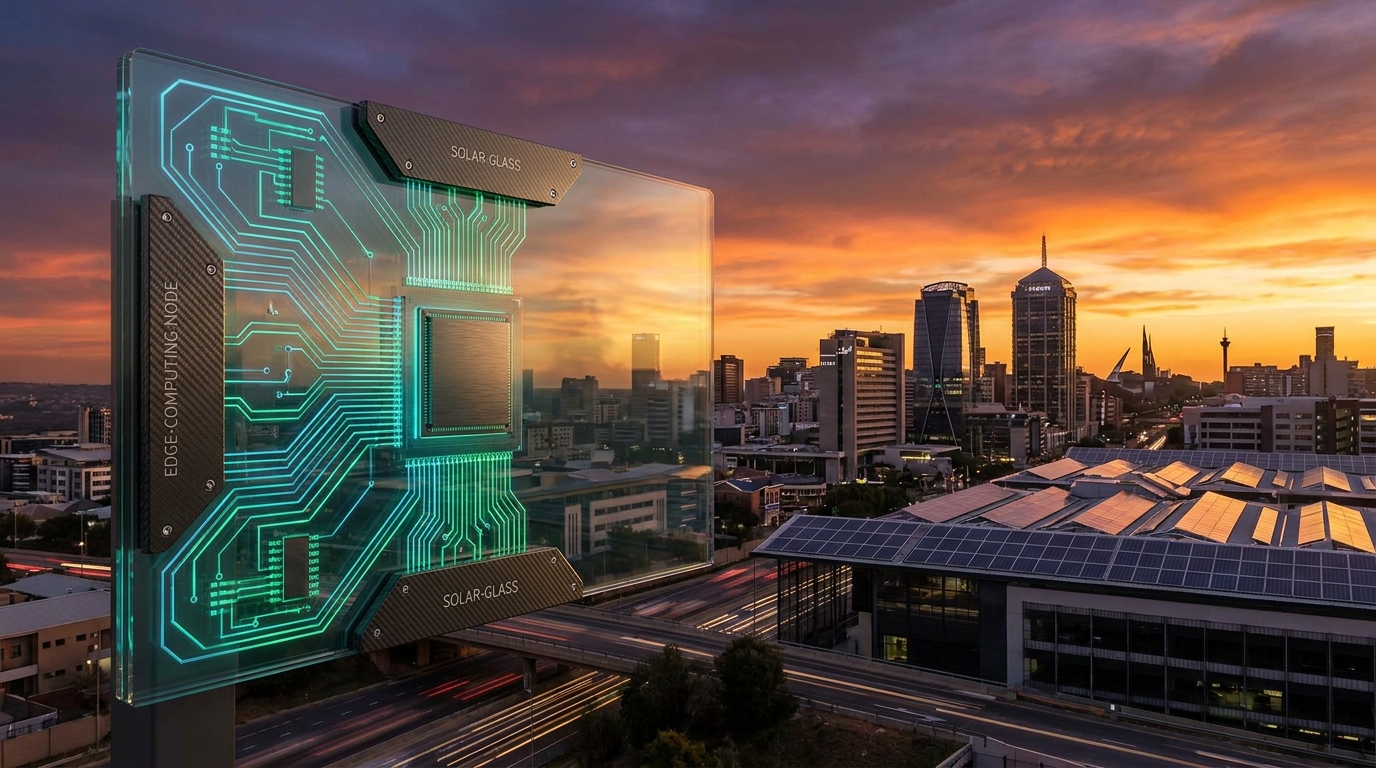
Discover how South African businesses are using energy-aware AI engineering and small language models to thrive in the 2026 landscape of decentralized power and competitive energy markets.
As we navigate the second quarter of 2026, the South African business landscape has reached a pivotal junction. The energy crisis that defined the early 2020s has evolved from a struggle for survival into a sophisticated era of decentralized management. While the dark days of Stage 6 load shedding have largely receded—thanks to a massive influx of private renewable capacity and the stabilization of the Eskom fleet—the infrastructure reality of 2026 presents a new challenge: cost-efficiency in a volatile, multi-buyer energy market. For the modern South African entrepreneur, the question is no longer just whether the lights will stay on, but how much every kilowatt-hour of AI inference is costing the bottom line.
Energy-aware AI engineering has emerged as the definitive technical discipline for this era. It is the practice of designing software that is not only functional but also power-adaptive—capable of scaling its computational intensity based on the real-time state of the grid or the availability of onsite solar reserves. With the South African Wholesale Electricity Market (SAWEM) officially beginning trade in Q3 2026, businesses now face dynamic pricing that rewards those who can shift their heavy compute loads to periods of high renewable penetration. In this context, building 'green' software is no longer a corporate social responsibility checkbox; it is a fundamental pillar of operational resilience.
One of the most significant shifts we have seen in 2026 is the transition from massive, centralized Large Language Models (LLMs) to specialized Small Language Models (SLMs). While the hype of 2024 was centered on frontier models with trillions of parameters, the 2026 reality is dominated by 'edge-first' architectures. Models like Microsoft’s Phi-4 and Google’s Gemini Nano 3 have proven that for 80% of business automation tasks—such as document classification, customer sentiment analysis, and structured data extraction—a 3-billion parameter model is more than sufficient. These SLMs can run locally on specialized Neural Processing Units (NPUs) or edge devices like the NVIDIA Jetson Orin series, consuming a fraction of the power required for a cloud-based API call to a massive data center.
To achieve true power-adaptivity, South African developers are increasingly adopting the Green Software Foundation’s Carbon Aware SDK, which reached version 1.8 in late 2025. This toolset allows software to query real-time carbon intensity and grid strain. In practice, a South African logistics firm might use this SDK to delay non-critical AI-driven route optimizations until their rooftop solar array is at peak production, or until the national grid signals a period of low demand. By integrating these 'carbon-aware' triggers into CI/CD pipelines—a practice now known as GreenOps—companies are reporting up to a 30% reduction in cloud compute costs and a significant decrease in their Scope 3 emissions.
Technically, this is achieved through three core strategies: quantization, pruning, and distillation. Quantization involves reducing the precision of the numbers used in AI calculations (for example, moving from 16-bit to 4-bit integers), which drastically lowers the memory and energy footprint of the model with negligible loss in accuracy. Pruning removes redundant neurons within a network that do not contribute to the final output, while distillation allows a smaller 'student' model to learn the essential logic of a larger 'teacher' model. When combined with the latest hardware, such as the NVIDIA Blackwell architecture which offers 30x higher energy efficiency than the previous Hopper generation, the result is a highly potent AI capability that can survive and thrive even on a constrained local microgrid.
However, the move toward energy-aware engineering is not solely about the code. It is about the 'Physical AI' reality of 2026. As South Africa’s renewable energy capacity surpasses 18 gigawatts, distributed across thousands of private solar and wind sites, the infrastructure has become a 'prosumer' network. AI agents are now being used to manage these microgrids, but those agents themselves must be energy-efficient. We are seeing a rise in 'grid-responsive' software architecture where applications have a 'low-power mode'—much like a smartphone. When a business’s battery storage hits a certain threshold, the AI might switch from a high-precision generative model to a faster, more efficient heuristic model to preserve energy for critical operations.
For the South African entrepreneur, the business value of this approach is three-fold. First, it provides a buffer against the rising municipal electricity tariffs, which saw another 9% hike in early 2026. Second, it ensures that AI-driven services remain available even during localized grid maintenance or transmission constraints. Finally, as global ESG (Environmental, Social, and Governance) reporting standards become more stringent, having a verifiable, energy-efficient tech stack is becoming a prerequisite for securing international investment and partnership.
At WriteNow Agency, we have spent the last few years helping South African firms navigate this transition, moving away from bloated, energy-hungry legacy systems toward lean, power-adaptive AI solutions. We believe that the most successful companies of 2026 will be those that treat energy as a first-class constraint in their software architecture. By choosing the right model size, leveraging edge computing, and implementing carbon-aware scheduling, businesses can turn the challenge of South Africa’s energy transition into a competitive advantage.
In conclusion, the infrastructure reality of 2026 demands a new kind of engineering rigor. The era of 'compute at any cost' is over. The future belongs to the power-adaptive—the architects who can build intelligent systems that respect the limitations of the grid while maximizing the opportunities of the new energy economy. By embracing energy-aware AI, South African businesses are not just saving money; they are building a more sustainable and resilient digital future for the entire region.
Energy-aware AI engineering has emerged as the definitive technical discipline for this era. It is the practice of designing software that is not only functional but also power-adaptive—capable of scaling its computational intensity based on the real-time state of the grid or the availability of onsite solar reserves. With the South African Wholesale Electricity Market (SAWEM) officially beginning trade in Q3 2026, businesses now face dynamic pricing that rewards those who can shift their heavy compute loads to periods of high renewable penetration. In this context, building 'green' software is no longer a corporate social responsibility checkbox; it is a fundamental pillar of operational resilience.
One of the most significant shifts we have seen in 2026 is the transition from massive, centralized Large Language Models (LLMs) to specialized Small Language Models (SLMs). While the hype of 2024 was centered on frontier models with trillions of parameters, the 2026 reality is dominated by 'edge-first' architectures. Models like Microsoft’s Phi-4 and Google’s Gemini Nano 3 have proven that for 80% of business automation tasks—such as document classification, customer sentiment analysis, and structured data extraction—a 3-billion parameter model is more than sufficient. These SLMs can run locally on specialized Neural Processing Units (NPUs) or edge devices like the NVIDIA Jetson Orin series, consuming a fraction of the power required for a cloud-based API call to a massive data center.
To achieve true power-adaptivity, South African developers are increasingly adopting the Green Software Foundation’s Carbon Aware SDK, which reached version 1.8 in late 2025. This toolset allows software to query real-time carbon intensity and grid strain. In practice, a South African logistics firm might use this SDK to delay non-critical AI-driven route optimizations until their rooftop solar array is at peak production, or until the national grid signals a period of low demand. By integrating these 'carbon-aware' triggers into CI/CD pipelines—a practice now known as GreenOps—companies are reporting up to a 30% reduction in cloud compute costs and a significant decrease in their Scope 3 emissions.
Technically, this is achieved through three core strategies: quantization, pruning, and distillation. Quantization involves reducing the precision of the numbers used in AI calculations (for example, moving from 16-bit to 4-bit integers), which drastically lowers the memory and energy footprint of the model with negligible loss in accuracy. Pruning removes redundant neurons within a network that do not contribute to the final output, while distillation allows a smaller 'student' model to learn the essential logic of a larger 'teacher' model. When combined with the latest hardware, such as the NVIDIA Blackwell architecture which offers 30x higher energy efficiency than the previous Hopper generation, the result is a highly potent AI capability that can survive and thrive even on a constrained local microgrid.
However, the move toward energy-aware engineering is not solely about the code. It is about the 'Physical AI' reality of 2026. As South Africa’s renewable energy capacity surpasses 18 gigawatts, distributed across thousands of private solar and wind sites, the infrastructure has become a 'prosumer' network. AI agents are now being used to manage these microgrids, but those agents themselves must be energy-efficient. We are seeing a rise in 'grid-responsive' software architecture where applications have a 'low-power mode'—much like a smartphone. When a business’s battery storage hits a certain threshold, the AI might switch from a high-precision generative model to a faster, more efficient heuristic model to preserve energy for critical operations.
For the South African entrepreneur, the business value of this approach is three-fold. First, it provides a buffer against the rising municipal electricity tariffs, which saw another 9% hike in early 2026. Second, it ensures that AI-driven services remain available even during localized grid maintenance or transmission constraints. Finally, as global ESG (Environmental, Social, and Governance) reporting standards become more stringent, having a verifiable, energy-efficient tech stack is becoming a prerequisite for securing international investment and partnership.
At WriteNow Agency, we have spent the last few years helping South African firms navigate this transition, moving away from bloated, energy-hungry legacy systems toward lean, power-adaptive AI solutions. We believe that the most successful companies of 2026 will be those that treat energy as a first-class constraint in their software architecture. By choosing the right model size, leveraging edge computing, and implementing carbon-aware scheduling, businesses can turn the challenge of South Africa’s energy transition into a competitive advantage.
In conclusion, the infrastructure reality of 2026 demands a new kind of engineering rigor. The era of 'compute at any cost' is over. The future belongs to the power-adaptive—the architects who can build intelligent systems that respect the limitations of the grid while maximizing the opportunities of the new energy economy. By embracing energy-aware AI, South African businesses are not just saving money; they are building a more sustainable and resilient digital future for the entire region.



Comments (0)
Leave a Comment