

Defending SA Executives: AI Vishing and Voice Biometric Liveness
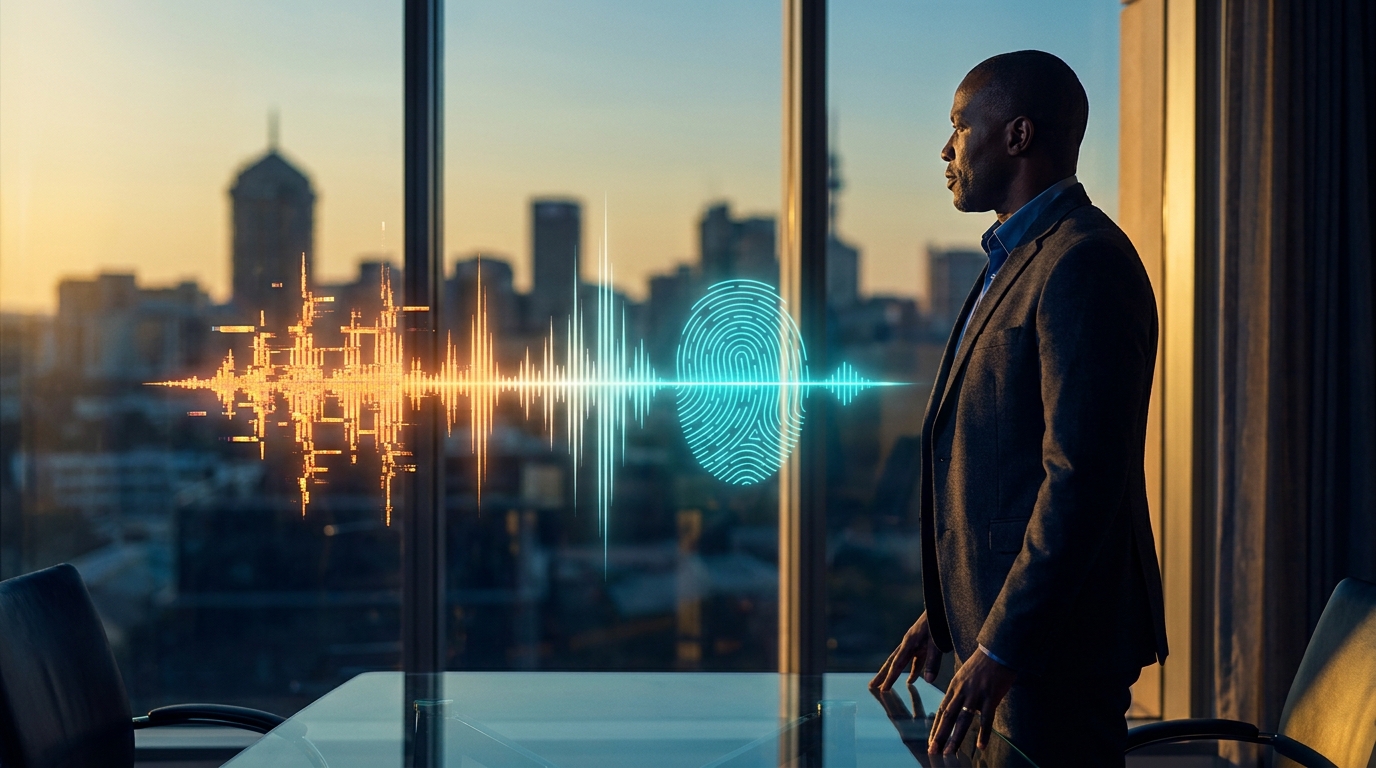
Protect your South African business from sophisticated AI-driven voice scams by integrating real-time biometric liveness checks into executive approval pipelines.
The landscape of corporate security in South Africa is undergoing a radical shift as generative artificial intelligence moves from a novelty tool to a weaponized asset for cybercriminals. One of the most pressing threats facing local business owners and entrepreneurs is AI-driven vishing, or voice phishing. Unlike traditional phishing, which relies on deceptive emails, AI vishing utilizes deepfake audio technology to impersonate trusted executives, colleagues, or service providers. In a country where personal relationships and verbal confirmations often drive business speed, the vulnerability of executive approval pipelines has never been higher. According to recent reports from the South African Banking Risk Information Centre (SABRIC), social engineering remains a primary driver of financial crime, and the emergence of synthetic media is adding a dangerous new layer to this challenge.
To understand the gravity of the threat, one must look at the accessibility of the technology involved. Tools like ElevenLabs, OpenAI’s Voice Engine, and various open-source models allow an attacker to clone a human voice using as little as thirty seconds of high-quality audio. For a South African CEO who frequently speaks at public events, posts video content on LinkedIn, or participates in radio interviews, there is an abundance of source material available online for bad actors to exploit. Once a voice is cloned, an attacker can place a call to a financial controller or a junior executive, sounding exactly like the CEO, and authorize an urgent 'emergency' payment or request sensitive data. This is no longer a theoretical risk; global incidents, such as the widely reported case where a multinational firm in Hong Kong lost $25 million due to a deepfake video and audio conference call, serve as a stark warning to the local market.
Traditional executive approval pipelines in many South African companies often rely on a mix of email authorization followed by a telephonic confirmation. While this 'two-factor' approach was once robust, it is easily bypassed by AI vishing. To counter this, forward-thinking South African enterprises are turning to real-time voice biometric liveness checks. Unlike standard voice recognition, which simply matches a voice to a stored print, liveness detection determines whether the audio being presented is a live human being or a synthetic reproduction. This technology analyzes sub-perceptual nuances in the audio, such as breathing patterns, micro-fluctuations in pitch, and the physical acoustics of human speech production that current AI models struggle to replicate perfectly in real-time.
Integrating these checks into a business's approval workflow requires a strategic approach to software architecture. Leading global providers like Pindrop, Nuance (a Microsoft company), and IDVerse offer sophisticated APIs that can be integrated into custom enterprise resource planning (ERP) systems or dedicated approval apps. When an executive initiates a high-value transaction or a sensitive data request, the system can trigger a mandatory voice verification step. The executive provides a short, randomized phrase, and the liveness detection engine analyzes the audio stream in milliseconds. If the system detects the tell-tale signs of a synthetic voice or a 'replay attack,' the transaction is immediately flagged and blocked, regardless of how convincing the voice sounds to the human ear.
In the South African context, the implementation of such technology must be balanced with the requirements of the Protection of Personal Information Act (POPIA). Biometric data is classified as 'special personal information' under POPIA, meaning businesses must ensure they have explicit consent and robust security measures in place to store and process this data. However, the risk of non-compliance and the potential for massive financial loss due to fraud often outweigh the administrative burden of securing biometric systems. Local companies are increasingly looking at 'privacy-by-design' frameworks where voice prints are converted into encrypted mathematical hashes that cannot be reverse-engineered back into actual audio, providing a layer of protection for the executive’s identity.
Beyond the technical implementation, South African entrepreneurs must foster a culture of 'verification by default.' While voice biometrics provide a powerful technical shield, they should be part of a multi-modal security strategy. This includes using hardware security keys, encrypted messaging platforms like Signal for internal communication, and establishing strict 'out-of-band' verification protocols for any transaction exceeding a specific Rand value. The goal is to create a friction-filled environment for attackers while maintaining a seamless experience for legitimate users. As AI continues to evolve, the window for human detection of deepfakes is closing, making automated, real-time liveness checks an essential component of the modern corporate armory.
For businesses looking to navigate this complex intersection of AI and security, partnering with specialists who understand the local landscape is vital. WriteNow Agency works with South African firms to build secure, automated pipelines that integrate these advanced biometric solutions into existing business processes. By moving away from legacy approval methods and embracing real-time, AI-resistant verification, South African businesses can protect their assets and their reputations from the next generation of digital threats. The transition from reactive security to proactive, biometric-led defense is no longer a luxury but a necessity for any organization operating in the digital economy.
Ultimately, the rise of AI-driven vishing is a reminder that in the digital age, trust must be earned through data, not just sound. By implementing voice biometric liveness checks, South African executives can ensure that when they give an order, their team knows it is truly them on the other end of the line. The technology to defend against AI is already here; the challenge for South African business leaders is to deploy it before the attackers find their next target.
To understand the gravity of the threat, one must look at the accessibility of the technology involved. Tools like ElevenLabs, OpenAI’s Voice Engine, and various open-source models allow an attacker to clone a human voice using as little as thirty seconds of high-quality audio. For a South African CEO who frequently speaks at public events, posts video content on LinkedIn, or participates in radio interviews, there is an abundance of source material available online for bad actors to exploit. Once a voice is cloned, an attacker can place a call to a financial controller or a junior executive, sounding exactly like the CEO, and authorize an urgent 'emergency' payment or request sensitive data. This is no longer a theoretical risk; global incidents, such as the widely reported case where a multinational firm in Hong Kong lost $25 million due to a deepfake video and audio conference call, serve as a stark warning to the local market.
Traditional executive approval pipelines in many South African companies often rely on a mix of email authorization followed by a telephonic confirmation. While this 'two-factor' approach was once robust, it is easily bypassed by AI vishing. To counter this, forward-thinking South African enterprises are turning to real-time voice biometric liveness checks. Unlike standard voice recognition, which simply matches a voice to a stored print, liveness detection determines whether the audio being presented is a live human being or a synthetic reproduction. This technology analyzes sub-perceptual nuances in the audio, such as breathing patterns, micro-fluctuations in pitch, and the physical acoustics of human speech production that current AI models struggle to replicate perfectly in real-time.
Integrating these checks into a business's approval workflow requires a strategic approach to software architecture. Leading global providers like Pindrop, Nuance (a Microsoft company), and IDVerse offer sophisticated APIs that can be integrated into custom enterprise resource planning (ERP) systems or dedicated approval apps. When an executive initiates a high-value transaction or a sensitive data request, the system can trigger a mandatory voice verification step. The executive provides a short, randomized phrase, and the liveness detection engine analyzes the audio stream in milliseconds. If the system detects the tell-tale signs of a synthetic voice or a 'replay attack,' the transaction is immediately flagged and blocked, regardless of how convincing the voice sounds to the human ear.
In the South African context, the implementation of such technology must be balanced with the requirements of the Protection of Personal Information Act (POPIA). Biometric data is classified as 'special personal information' under POPIA, meaning businesses must ensure they have explicit consent and robust security measures in place to store and process this data. However, the risk of non-compliance and the potential for massive financial loss due to fraud often outweigh the administrative burden of securing biometric systems. Local companies are increasingly looking at 'privacy-by-design' frameworks where voice prints are converted into encrypted mathematical hashes that cannot be reverse-engineered back into actual audio, providing a layer of protection for the executive’s identity.
Beyond the technical implementation, South African entrepreneurs must foster a culture of 'verification by default.' While voice biometrics provide a powerful technical shield, they should be part of a multi-modal security strategy. This includes using hardware security keys, encrypted messaging platforms like Signal for internal communication, and establishing strict 'out-of-band' verification protocols for any transaction exceeding a specific Rand value. The goal is to create a friction-filled environment for attackers while maintaining a seamless experience for legitimate users. As AI continues to evolve, the window for human detection of deepfakes is closing, making automated, real-time liveness checks an essential component of the modern corporate armory.
For businesses looking to navigate this complex intersection of AI and security, partnering with specialists who understand the local landscape is vital. WriteNow Agency works with South African firms to build secure, automated pipelines that integrate these advanced biometric solutions into existing business processes. By moving away from legacy approval methods and embracing real-time, AI-resistant verification, South African businesses can protect their assets and their reputations from the next generation of digital threats. The transition from reactive security to proactive, biometric-led defense is no longer a luxury but a necessity for any organization operating in the digital economy.
Ultimately, the rise of AI-driven vishing is a reminder that in the digital age, trust must be earned through data, not just sound. By implementing voice biometric liveness checks, South African executives can ensure that when they give an order, their team knows it is truly them on the other end of the line. The technology to defend against AI is already here; the challenge for South African business leaders is to deploy it before the attackers find their next target.

Comments (0)
Leave a Comment